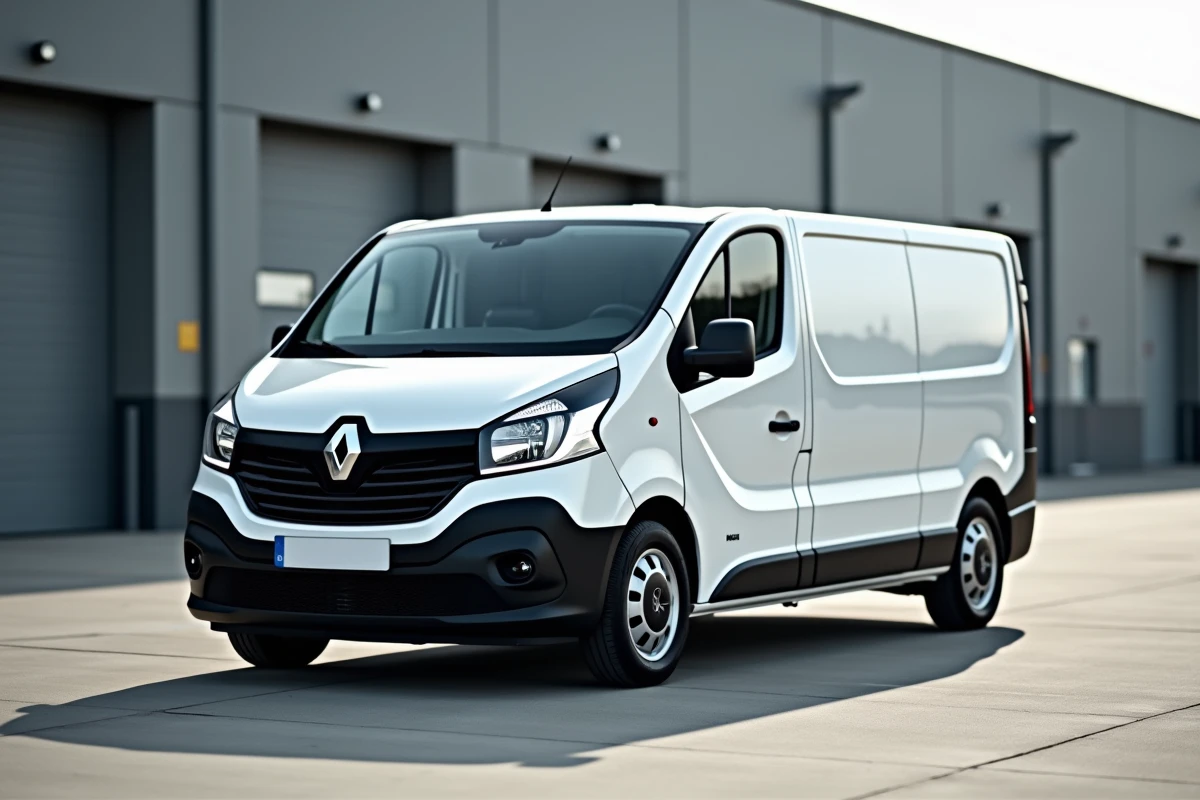
The Renault Trafic L2H1 attracts candidates for van conversions with its size that fits under most parking barriers. With an exterior height of about 2.02 m and a length of around 5.48 m, this van occupies a middle ground that is as appealing as it is limiting. Understanding precisely what these dimensions allow (and prohibit) in terms of interior layout can prevent many disappointments once the first panels are installed.
Ceiling Height of the Trafic L2H1: The Constraint Not Shown in Plans
Most presentations of the Trafic L2H1 emphasize its useful length, close to 2.90 m. The interior height, however, deserves more attention. With about 1.38 m under the bare roof, it is physically impossible to stand inside the vehicle.
This figure decreases further once insulation and paneling are added. Traditional insulation with cork or Armaflex, combined with paneling or thin plywood, easily consumes several centimeters. The fitted floor (insulation, wooden flooring) takes away even more. Ultimately, the height actually usable for moving around or sitting can drop below 1.20 m.
The direct consequence on the layout: a fixed bed in a high position, like a “pop-up bed,” reduces the living space below to the point of making it nearly unusable. The most functional configurations in a Trafic L2H1 favor a comb bed or a foldable sleeping area that frees up space during the day. A detailed guide outlining the dimensions of the Renault Trafic L2H1 allows for checking each measurement before finalizing a layout plan.
Width and Walls of the Trafic L2H1: What Facilitates (or Complicates) the Installation of Battens
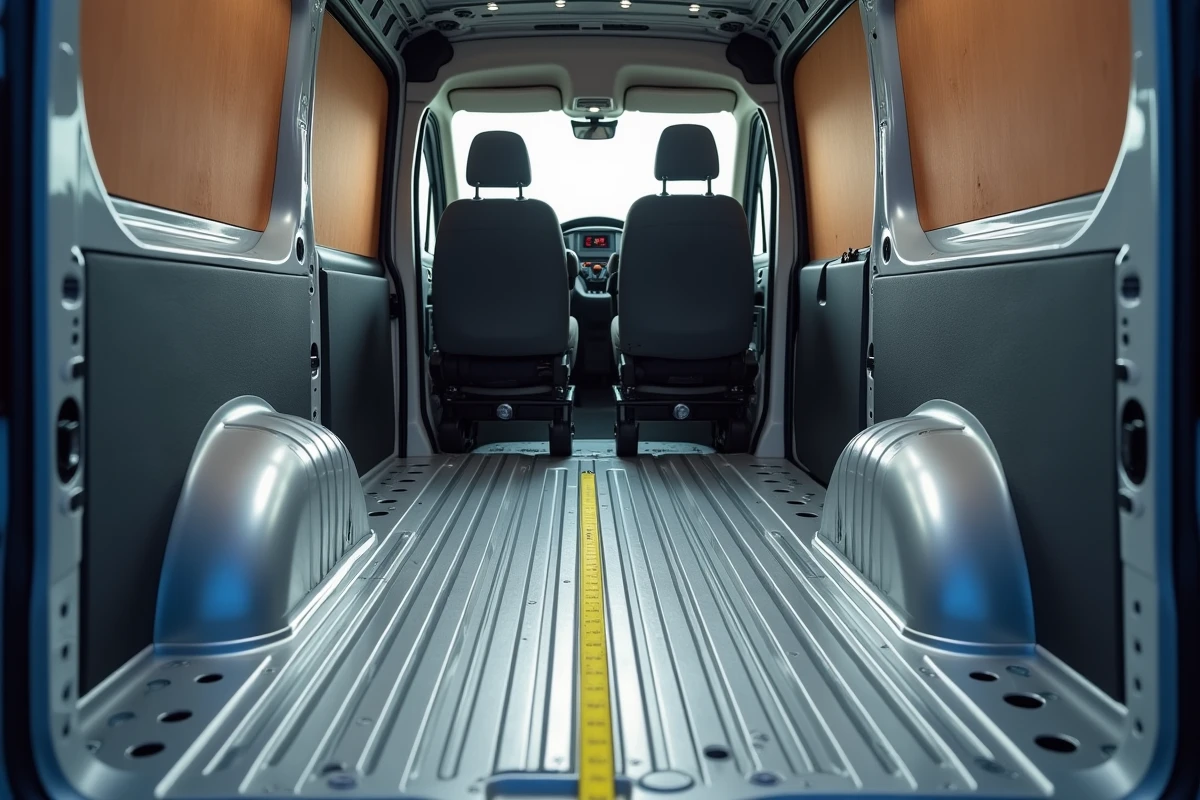
The exterior width of the Trafic L2H1 is around 1.96 m. Inside, the wheel arches and body reinforcements reduce the usable width on the floor. However, the walls present an advantage often mentioned by converters: they are relatively straight compared to other vans in the segment.
This geometry simplifies the attachment of vertical and horizontal battens, which serve as a supporting structure for furniture, shelves, and interior paneling. On a vehicle with very curved sides, each batten requires a different thickness spacer. On the Trafic, the gap remains moderate, which reduces installation time and adjustments.
Wheel Arches and Low Furniture
The rear wheel arches encroach on the cargo area and dictate the width of the side furniture. A kitchen unit installed against the wall must navigate around this bump, either by incorporating a cutout or by limiting itself to the area in front of or behind the wheel arch.
The width between the two wheel arches also determines the maximum size of a transverse bed. In an L2H1, a sleeping area 140 cm wide generally fits, but with tight margins that require measuring the actual vehicle, not just the technical specifications.
Renault Trafic L2H1 Against Height Bars: The Real Margin After Conversion
One of the recurring arguments in favor of the Trafic L2H1 is its ability to pass under parking barriers, often set at 1.90 m or 2.00 m. With its original exterior height of 2.02 m, the margin is almost nonexistent.
Any addition to the roof negates this advantage. A ventilation hatch protrudes by a few centimeters. A rigid solar panel, even of low thickness, added with its mounts, can push the height over 2.10 m. A roof rack designed to carry sports equipment renders the promise of a “discreet van that fits everywhere” obsolete.
Field reports vary on this point: some owners claim to pass under barriers marked at 2.00 m due to the usual tolerance of a few centimeters. Others report barriers calibrated to the millimeter in recent underground parking lots. Before finalizing a layout plan with roof equipment, one must weigh the options between natural ventilation and access to covered parking.

Payload of the Trafic L2H1: The Weight Remaining for Conversion
The interior dimensions alone are not enough to validate a conversion project. The available weight constitutes the other structural limit. In thermal versions, the payload varies according to the engine and the level of original equipment.
For electric versions (Trafic E-Tech L2H1), available data indicates a GVW around 3.07 t for a payload exceeding 1.2 t. The traction battery is included in the empty weight, meaning that the remaining mass for conversion, passengers, and cargo must be calculated precisely.
Here are the weight items to anticipate during the design:
- Complete insulation (floor, walls, ceiling) and wood or composite paneling easily weigh several dozen kilos, depending on the chosen materials and thickness.
- A compact kitchen unit (sink, stove, cabinet, water tank) with a compressor refrigerator represents a significant item, often underestimated before the final weighing.
- The autonomous electrical system (auxiliary battery, inverter, wiring, solar panel) adds a considerable weight, especially if aiming for several days of autonomy.
- The sleeping furniture (comb bed structure, mattress, integrated storage) and safety accessories (fire extinguisher, gas detector for potential VASP approval) complete the tally.
A complete conversion in solid wood can consume half of the available payload. Lightweight materials (poplar plywood, honeycomb panels, Armaflex for insulation) allow for preserving margin for daily cargo.
Trafic L2H1 Compared to Competing Vans: A Few Centimeters That Change the Plan
The Trafic L2 is longer than some “long” competitors in the same segment. Compared to a Volkswagen Multivan T7 Long, for example, the Trafic gains about 30 cm in total length, resulting in a more generous rear compartment or a more comfortable fixed bed.
However, this additional length complicates urban parking. A Trafic L2 does not park as easily as an L1 in standard downtown spaces. For mixed use (converted van during the week, professional transport vehicle), the length/maneuverability compromise should be evaluated before purchase.
The H1 height, on the other hand, remains the most discriminating factor. A Trafic H2 offers standing height but loses access to underground parking. The H1 choice requires accepting a seated living space, which directs the entire layout plan towards low and modular solutions. Measuring each dimension of the actual vehicle, checking manufacturer tolerances, and weighing each element before installation remain the three reflexes that separate a functional conversion from a project that needs to be redone.