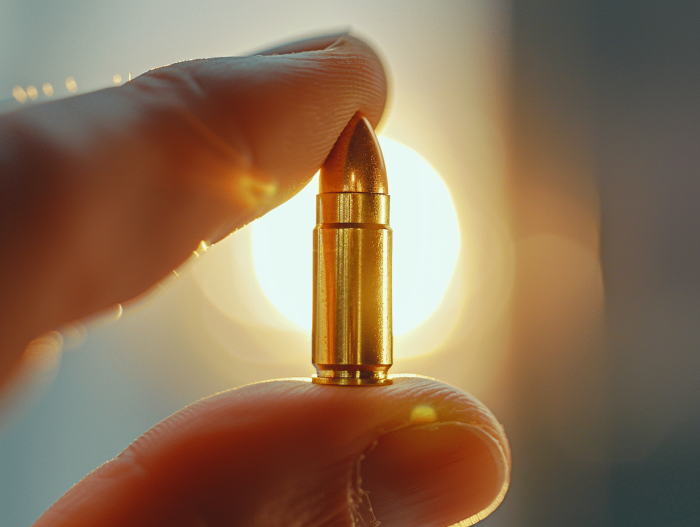
The 9mm caliber, widely used among security forces and firearm enthusiasts, is the subject of ongoing discussions regarding its capabilities. The ballistic performance of this caliber is critical for assessing its effectiveness in various situations, whether in terms of accuracy, penetration, or target stopping power. In-depth studies and field tests contribute to a detailed understanding of 9mm ballistics, helping to determine its optimal applications based on the specific needs of users. This detailed examination of the ballistic characteristics of the 9mm sheds light on its predominant role in the defense sector.
Detailed Analysis of 9mm Ballistic Performance
The 9mm ammunition, embodying standardization and popularity, is distinguished by technical characteristics that define its behavior in flight and its impact upon arrival. The speed of a 9mm bullet, ranging from 330 to 400 m/s at the muzzle, is a key parameter in assessing its kinetic energy and, by extension, its lethal potential. This speed, combined with the mass of the projectile, determines the penetration and expansion of the bullet, major elements of terminal ballistics. Consider the 9 × 19 mm Parabellum, originally designed for the German Empire and used by the Kaiserliche Marine: its reputation is well established.
The analysis of ballistic traces, a meticulous process of identifying firearms by the marks left on casings and projectiles, relies on both traditional and innovative approaches. The traditional (quantitative) approach is based on reproducible observations, while the probabilistic approach, relying on Bayes’ theorem, estimates the likelihood that a projectile came from a specific firearm. These methods contribute to a comprehensive understanding of the performance of the 9mm caliber, a preferred tool for law enforcement and firearm enthusiasts.
The terminal ballistics of the 9mm, particularly the study of bullet expansion and penetration in real-world situations, reveals that this caliber delivers adequate results, meeting the demands of confrontation scenarios. 9mm ammunition has become a symbol of reliability for standard handguns, thanks to its ability to neutralize targets without causing excessive damage. The accuracy of this ammunition, combined with its effectiveness, makes it a top choice in the field of security and defense.
Impact and Implications of the 9mm Caliber in Security and Defense Operations
The 9mm caliber, adopted by NATO as standard ammunition, is a central element in the coherence of defense operations on an international scale. The standardization of armaments provides armed forces of member countries with essential interoperability during joint missions. The 9 × 19 mm Parabellum, whose use by NATO has strengthened its position, enjoys recognition that transcends borders, strategies, and political issues.
In the United States, since 1985, the 9mm caliber has been established as a preferred choice for law enforcement, illustrating the trend towards favoring ammunition that is both effective and manageable. Forensic science also benefits, as standardization facilitates ballistic identification work at crime scenes, an area where the expertise of figures such as Pierre Margot, director of the Institute of Forensic Science in Lausanne, proves crucial.
Within law enforcement, 9mm ammunition enjoys popularity justified by its reliability and operational effectiveness. Specialized units, such as the GIGN in France or the FBI in the United States, rely on this caliber for a variety of missions, knowing that its penetration and impact are sufficient even against targets protected by bulletproof vests.
In Europe, 9mm ammunition is part of a tradition of quality and performance, a legacy of World War II and the development of submachine guns such as the British Sten. Today, the regulatory dimension, particularly in terms of firearm legislation, continues to evolve, but the 9mm caliber remains an essential reference in the arms market and defense strategies.