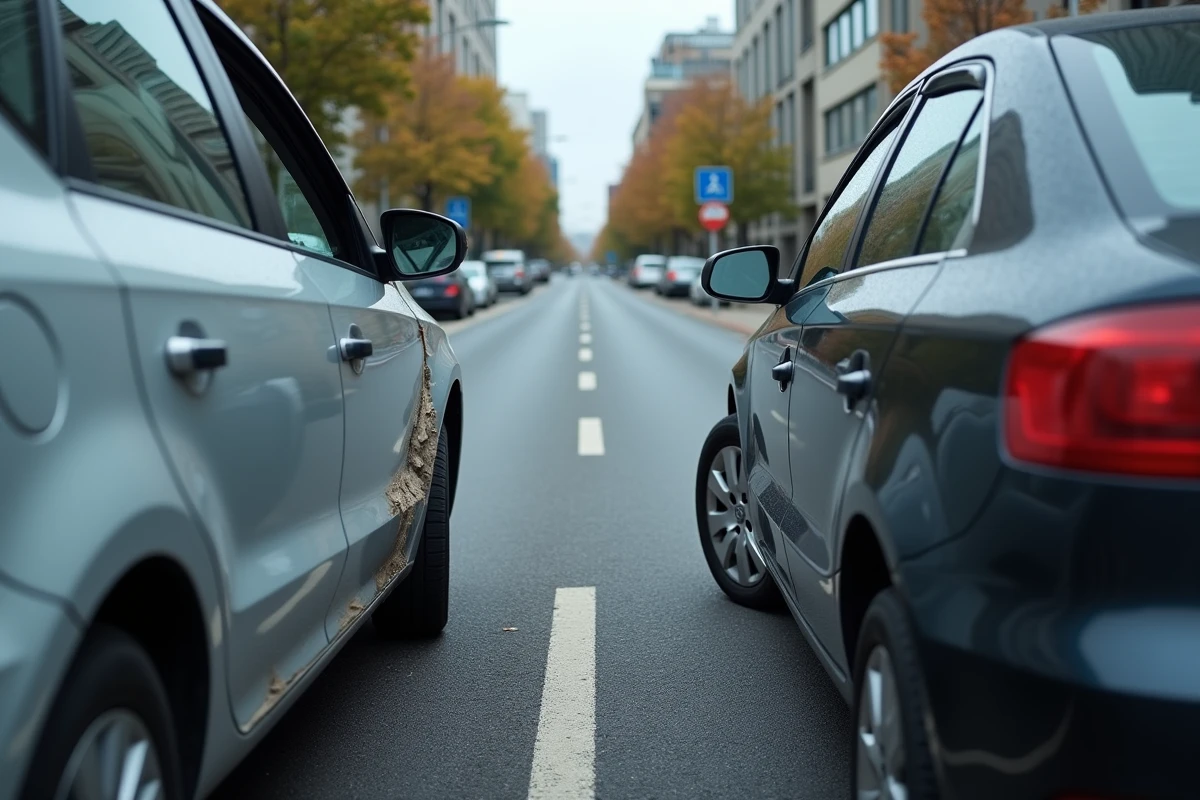
The determination of liability in a side impact relies on a legal mechanism distinct from that of a rear-end collision. The absence of an automatic presumption of fault complicates the analysis, and the arrival of ADAS systems in the French vehicle fleet reshuffles the cards of responsibility sharing between drivers.
ADAS and lateral emergency braking: towards a reassessment of the IRSA scale
The IRSA scale (Direct Compensation for the Insured and Recourse between Insurance Companies) is based on codified case types between insurers. These case types were designed for vehicles without electronic assistance. A vehicle equipped with lateral emergency braking or a blind spot detection system alters the dynamics of the accident: the reaction time is no longer solely that of the driver, but that of the driver-machine couple.
We observe that experts appointed by insurers are beginning to integrate data from EDRs (Event Data Recorders) into their reports. These onboard recorders retain vehicle parameters in the seconds leading up to the impact: speed, acceleration, activation of assistance systems. When the ADAS should have intervened but did not, the question of the manufacturer’s liability arises alongside that of the driver.
To delve deeper into the question of who is responsible for a side impact on Déclic Auto, it is essential to understand that the IRSA scale does not have legally binding value. An insured party can contest it in court, which opens a gap for disputes involving ADAS failures.
Side impact and Badinter law: the applicable liability regime
The law of July 5, 1985 (Badinter law) governs the compensation of victims of traffic accidents. In the case of a side impact, the distinction between driver and non-driver remains crucial.
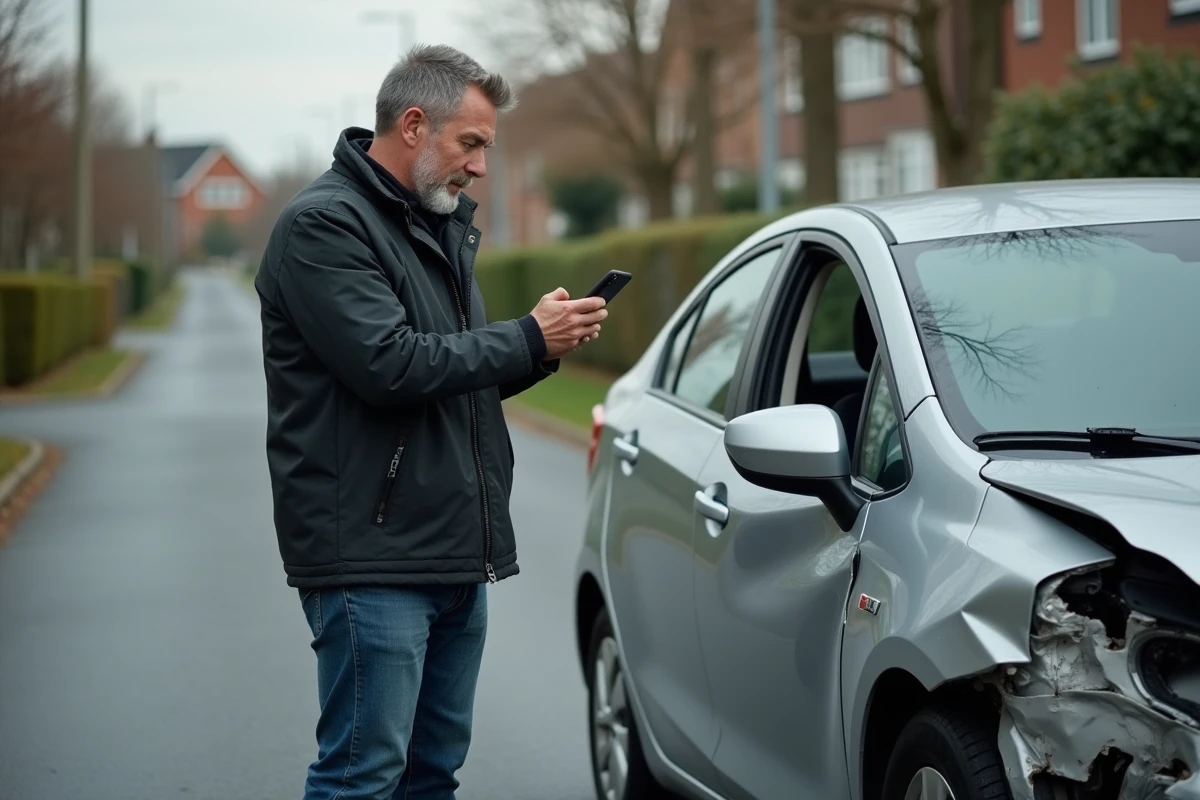
The non-driver (passenger, pedestrian, cyclist) benefits from almost automatic compensation for their bodily injuries, unless there is gross negligence on their part and provided it is the sole cause of the accident. For the driver, the situation is different: their own fault can reduce or eliminate their right to compensation.
In a side impact at an intersection, the driver’s fault is assessed in light of the priority rules of the Highway Code. Article R. 415-5 requires yielding to vehicles coming from the right, unless otherwise indicated. However, the reality of a side impact often exceeds this simple framework.
The case of lane changing and overtaking maneuvers
A side impact occurring during a lane change engages the liability of the vehicle making the maneuver. The driver changing lanes must ensure that the lane is clear and signal their intention (Article R. 412-10 of the Highway Code).
During overtaking, the overtaking vehicle bears the burden of proof that it has respected the lateral safety distances. We recommend filling out the amicable report by precisely checking the boxes corresponding to the maneuvers performed, as the checked boxes on the report constitute a difficult-to-contest admission later on.
Amicable report and side impact: costly mistakes
The amicable report is not a mere administrative formality. In the case of a side impact, the checked boxes in the circumstances column directly determine the allocation of liability retained by insurers.
Several recurring mistakes include:
- Checking the box “changing lanes” when the vehicle was going straight in its lane, under pressure from the other driver at the accident scene
- Failing to accurately draw the point of impact on the sketch, which allows the insurer to freely interpret the dynamics of the collision
- Not mentioning the presence of witnesses or surveillance cameras nearby, as these elements can reverse the distribution of fault
- Signing a double-sided report filled out by the other party without reviewing each mention, which amounts to acceptance of the described circumstances
A signed report binds its author. Any modification after signing requires a registered letter sent to the insurer within five days, accompanied by evidence (photos, testimonies, onboard video).
Shared liability in side impacts: how fault sharing works

Unlike rear-end collisions where the striking vehicle is presumed liable, side impacts frequently result in a 50/50 sharing of responsibility. This sharing occurs when neither driver can demonstrate the exclusive fault of the other.
The 50/50 sharing has direct consequences on compensation. Each driver only receives half of their material damages. In terms of the no-claims bonus, a shared responsibility results in the application of a reduced increase coefficient compared to total liability, but it still impacts the contract.
Contesting a sharing of responsibility
The contestation first goes through an appeal to one’s own insurer, providing new evidence. If unsuccessful, referring the matter to the insurance mediator is a prerequisite to any legal action.
Dashcams (onboard cameras) represent increasingly accepted evidence in courts. Their admissibility is not guaranteed in all cases, but a video recording clearly showing the dynamics of the side impact can be enough to shift a 50/50 sharing towards total liability of the other driver.
The evolution of the vehicle fleet towards cars equipped with sensors and recorders is gradually changing the burden of proof in disputes related to side impacts. ADAS and EDR data constitute factual elements that neither the amicable report nor the IRSA scale originally accounted for, and insurers as well as courts will need to adapt their analysis frameworks to this new technical reality.