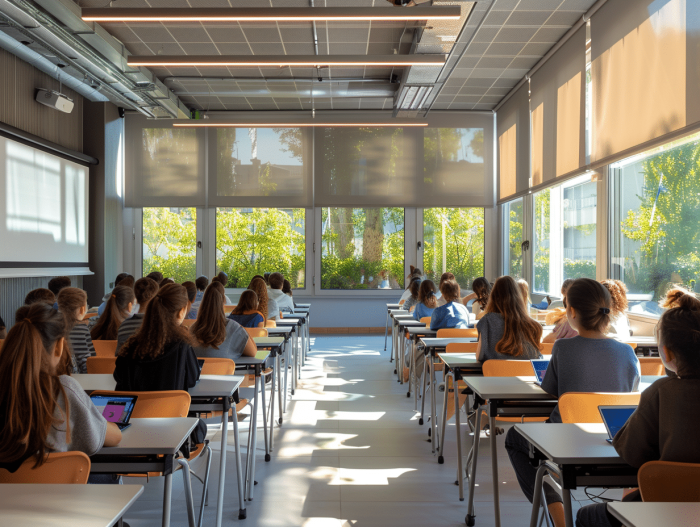
The Hauts-de-Seine department is a pioneer in the digital transformation of education, implementing initiatives aimed at integrating digital tools into the daily learning of middle school students. With the provision of individual equipment and the establishment of a robust infrastructure, schools in the department offer an environment conducive to the development of students’ digital skills. These actions reflect a commitment to modernized education, where access to information and interactive pedagogy play a central role, thus preparing young people for the digital age.
Digital transformation at the heart of schools in 92
Within Hauts-de-Seine, the digitalization of education is asserting itself as a tangible and dynamic reality serving middle school students. The Hauts-de-Seine Departmental Council, in close collaboration with the DSDEN 92 and with the support of the DANE of Versailles, orchestrates this transformation with a strategic and operational vision. Digital Work Environment (ENT) projects such as Oze 92 are gradually being rolled out, thereby revolutionizing teaching and management methods in schools.
National education stakeholders, led by the Hauts-de-Seine Departmental Council, have understood the stakes of a renewed education through digital means. With the implementation of the Digital College Nanterre and other similar initiatives, the colleges in the department benefit from a digital infrastructure that meets contemporary demands. These initiatives are part of a master ENT plan, established in consultation with the digital education management, aimed at ensuring coherence and efficiency in the actions taken.
The adoption of these new technologies in the educational environment does not occur without adequate training for educational stakeholders. The ministry’s innovation lab, supported by organizations such as Canopé, works on developing resources and training for teachers. These initiatives are crucial to ensure a smooth and competent transition to quality educational digitalization.
The partnerships established between the Hauts-de-Seine Departmental Council and various organizations are the fertile ground on which these innovative projects thrive. Events organized by the DANE of Versailles in innovation hubs like @Lab110bis, along with the exchange of practices between different departmental councils, position Hauts-de-Seine as a leader in integrating digital technology into education, thus preparing students to become informed and competent citizens of tomorrow.
Impact and perspectives of digitalization for middle school students
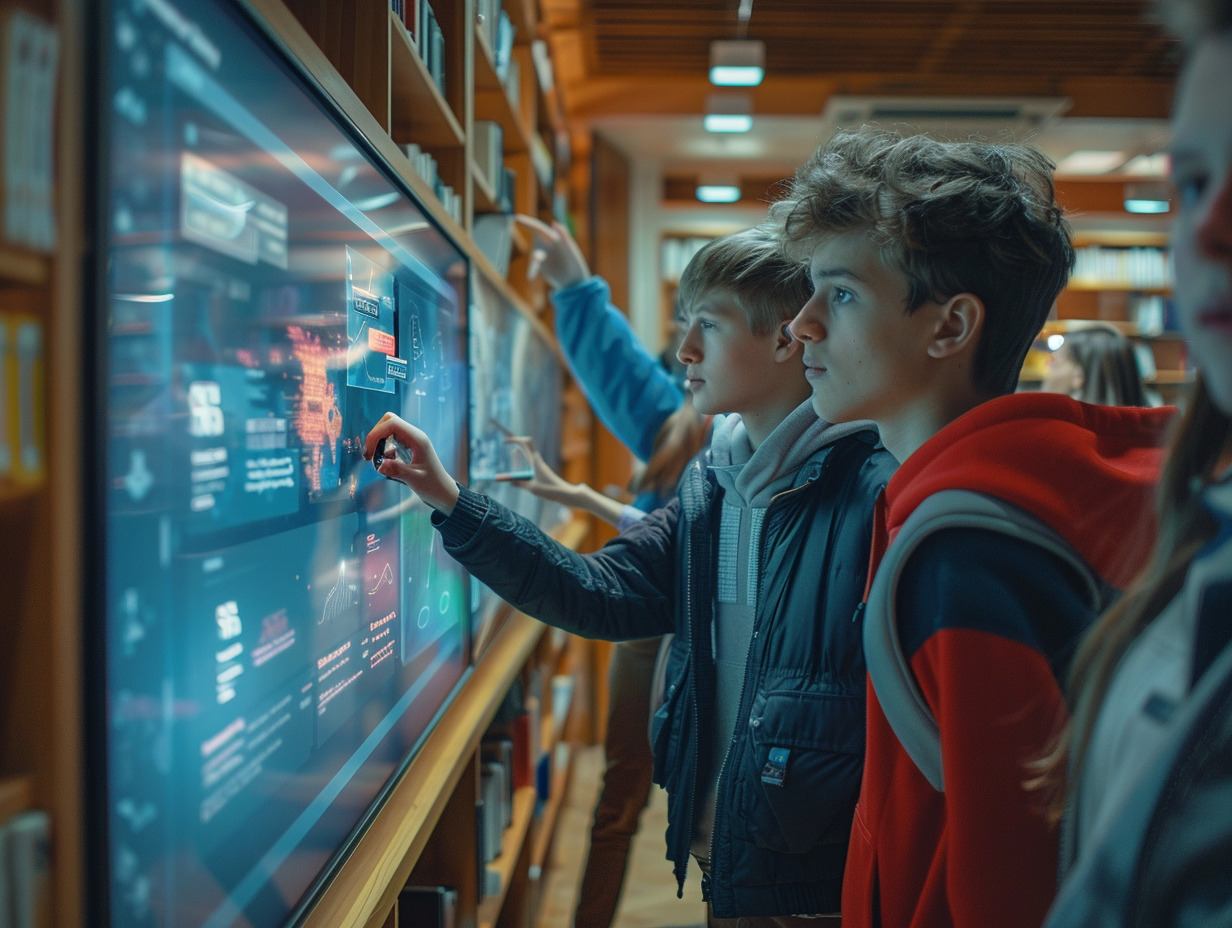
In the middle schools of Hauts-de-Seine, the impact of digitalization on students is evident through the development of essential digital skills. The online educational resources and collaborative work tools introduced by schools transform the educational experience. Students, like Raphaël from Claude-Chappe High School, learn to navigate skillfully in an environment rich in information and communication technologies, preparing these young minds for the complexities of today’s world.
Educational projects take on a new dimension thanks to the integration of digital tools. Media and information literacy becomes a key component of teaching, as highlighted by Joëlle Vasnier, president of the Les 4 Chemins association. Teachers, such as Jean-François Yippé, enrich their practice by integrating innovative methods, thereby facilitating access to a multitude of resources and stimulating students’ critical thinking.
The training of educational stakeholders, an essential vector of this transformation, receives particular attention. Ergonomics researchers, such as Maxime Garraud, participate in raising teachers’ awareness of new didactic practices. The strengthening of teachers’ digital skills is reflected in the establishment of specific training organized by organizations such as Canopé, aimed at supporting teachers in adopting the uses of digital spaces.
Digitalization opens new perspectives in terms of individualizing educational pathways. The use of algorithms and artificial intelligence, as seen in the AFFELNET 6th grade system, assists in student allocation by optimizing school zoning. Reports from France Stratégie indicate a trend towards improved student performance indicators thanks to these digital advancements. Information and communication technologies, when wisely integrated, contribute to forging an inclusive and high-performing school environment, adapted to the challenges of the digital age.