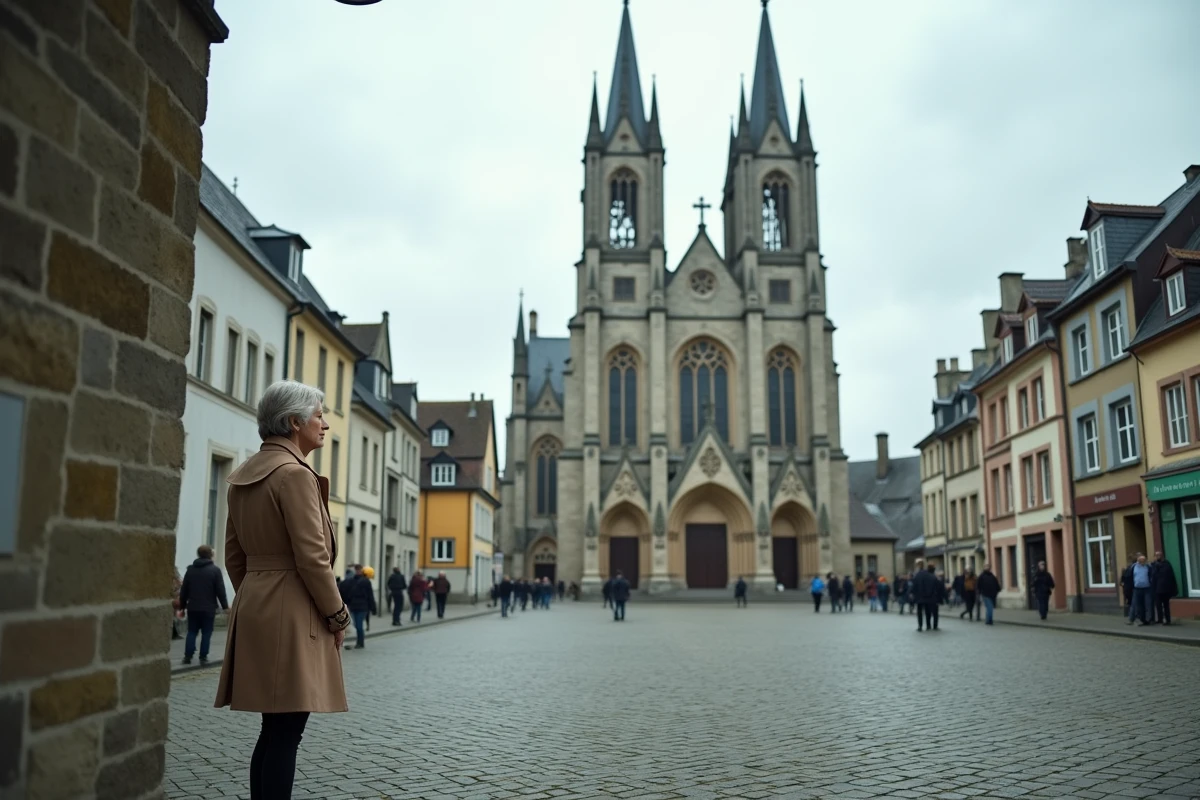
Quimper is the prefecture of Finistère and the historical capital of Cornouaille. The city is structured around the confluence of the Odet and Steïr rivers, two waterways that have shaped its urban plan since the Middle Ages. This river geography still influences today the distribution of neighborhoods, museums, and walking routes.
Contemporary Art and Artist Residencies in Quimper
Classic tourist guides associate Quimper with faience pottery and half-timbered houses. However, since 2022, the city has developed a contemporary cultural offering structured around two venues: the Le Quartier Contemporary Art Center and the Heritage House.
Le Quartier hosts artist residencies and exhibitions of current art, with a focus on contemporary Breton creation. The programming changes several times a year, justifying repeated visits even for locals.
The Heritage House complements this offering by intertwining local history with a contemporary perspective. These two spaces allow visitors to discover Quimper from an angle that the Saint-Corentin Cathedral and the banks of the Odet, as remarkable as they are, do not cover. To find cultural events and current addresses, information is gathered on so-quimper.fr, which lists programs by neighborhood and theme.

Slow Tourism in the Steïr Valley and Along the Odet River
Since 2023, the Quimper Bretagne Occidentale urban community has adopted a Tourism Development Plan covering the period 2023-2028. This document directs investments towards slow tourism, with new marked routes for walking and cycling along the Steïr Valley and the banks of the Odet.
The most significant route is the Estuaries Path, which connects Quimper to Bénodet. This trail follows the Odet in its estuarine section, through landscapes where vegetation changes with the tides. The route is suitable for both walkers and cyclists.
What These Routes Change Practically
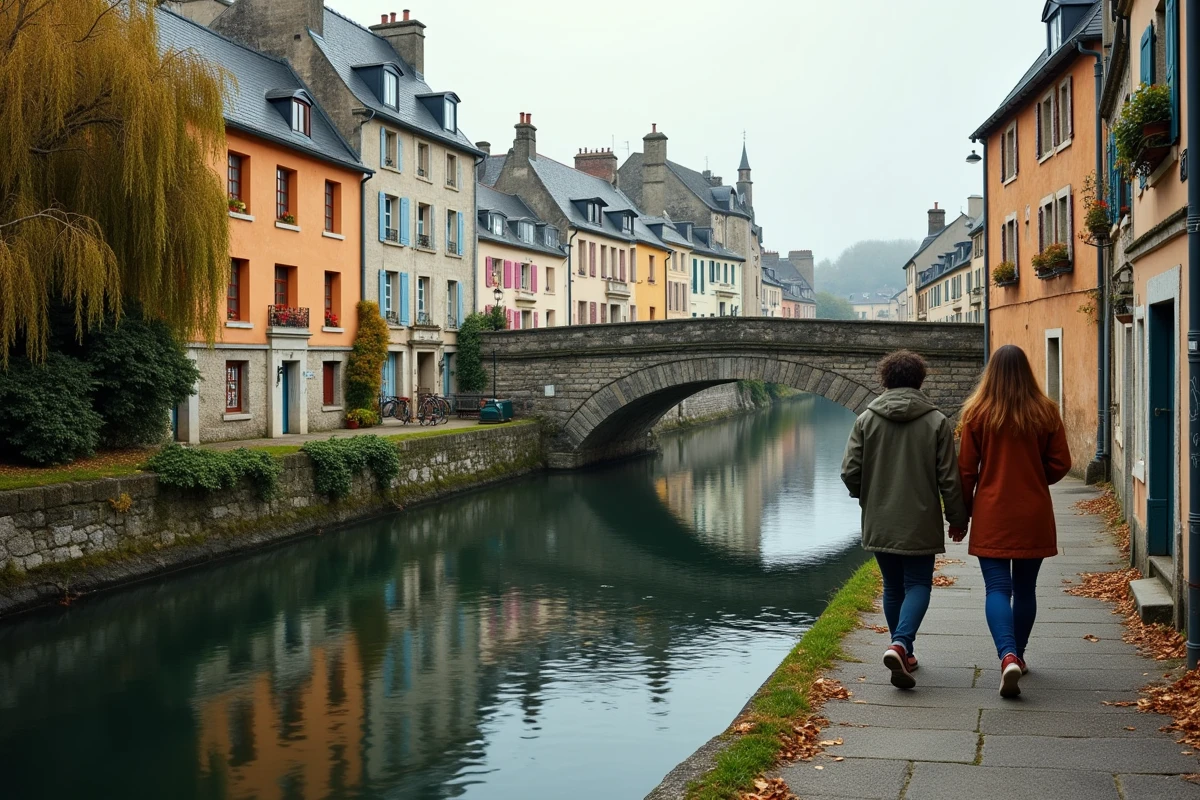
The Steïr Valley, upstream from the city center, offers a more wooded and less crowded setting than the banks of the Odet. The paths run alongside mills, washhouses, and old footbridges. The pace is that of a slow stroll, in contrast to the classic tourist circuits of the historic center.
These routes allow for walking between several points that are usually visited by car. The Quimper train station serves the city center, and the marked routes start directly from the banks accessible from the Place de la Résistance.
- The Estuaries Path (Quimper-Bénodet) follows the banks of the Odet in its estuarine section, with sections suitable for cycling.
- The Steïr Valley offers shaded forest trails, accessible year-round, with a possible starting point from the Ergué-Armel neighborhood.
- The banks of the Odet in the city center remain the most accessible starting point, just a few minutes from the Saint-Corentin Cathedral.
Locmaria and Quimper Faience: A Neighborhood in Its Own Right
Locmaria is the oldest inhabited neighborhood in Quimper. It is located on the right bank of the Odet, slightly set back from the historic center. This is where the faience factories of Quimper have established themselves, an activity documented for several centuries.
The neighborhood maintains an active artisanal fabric. The faience workshops are not just tourist showcases: production continues, and some workshops open their doors to show the manufacturing steps, from turning to hand painting.
Brittany Department Museum and Fine Arts Museum
The Brittany Department Museum, located in the former episcopal palace adjacent to the cathedral, showcases collections of art and history from Cornouaille. Furniture, costumes, archaeology: the tour traces Breton identity through its everyday objects.
The Fine Arts Museum, located in Place Saint-Corentin, houses collections of European painting and a section dedicated to the Pont-Aven school. Both museums can be visited in half a day and are just a few dozen meters apart.
Kerlic Health Ecosphere: A New Hub at the Gates of Quimper
The Kerlic neighborhood hosts a recent urban project called New Health Ecosphere. This hub combines accommodation, dining, green spaces, and healthcare facilities. A Mercure Hotel Quimper Kerlic has been announced with an opening planned for February 2026.
This type of development broadens the city’s tourist profile beyond the historic center. The establishment of wellness and accommodation facilities in Kerlic opens up possibilities for stays that combine cultural visits to the center with relaxation on the outskirts.
Quimper is not a museum city frozen in faience and granite. The Estuaries Path, artist residencies at Le Quartier, and the Kerlic hub shape a city that diversifies its access, rhythms, and audiences. The historic center remains the logical starting point, but the city’s outskirts gain interest each year.