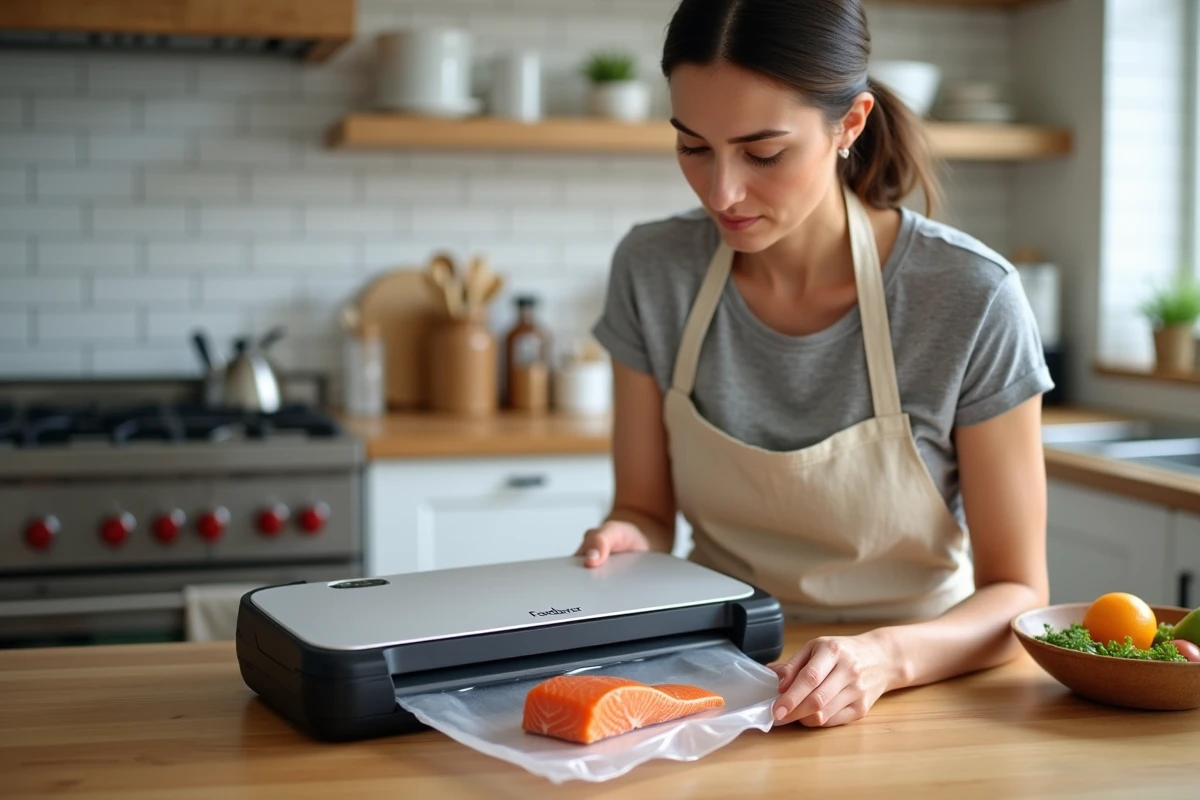
The FoodSaver V2860 is one of those home vacuum sealing devices that has made a mark in its segment. Marketed for several years by the American brand FoodSaver (now under Newell Brands), this two-part articulated model is still referenced on many sales platforms. Its design is based on a pump integrated into the upper part, combined with a cutting blade and a sealing system, all designed for regular use in the kitchen.
FoodSaver V2860 and recent consumables: a compatibility to check
The tests published since the release of the V2860 focus almost exclusively on the original rolls and bags provided. Few document a point that is of interest to users over time: compatibility with the latest ranges of FoodSaver accessories.
Recent product sheets from the brand indicate that rigid containers, wine stoppers, and reusable zip bags are generally compatible with older devices equipped with an integrated accessory port, like the V2860. This opens up uses rarely mentioned in historical reviews: vacuum sealing jars, preserving liquids, or even accelerated marinating using dedicated containers.
The question of generic consumables also deserves to be raised. Unbranded embossed rolls work with this device, provided the width of the sealing bar is respected. The long-term cost of use directly depends on this, as branded rolls represent the primary recurring expense. A point that our review of the FoodSaver V2860 details with concrete field feedback.
Sealing and suction of the V2860: what field feedback shows
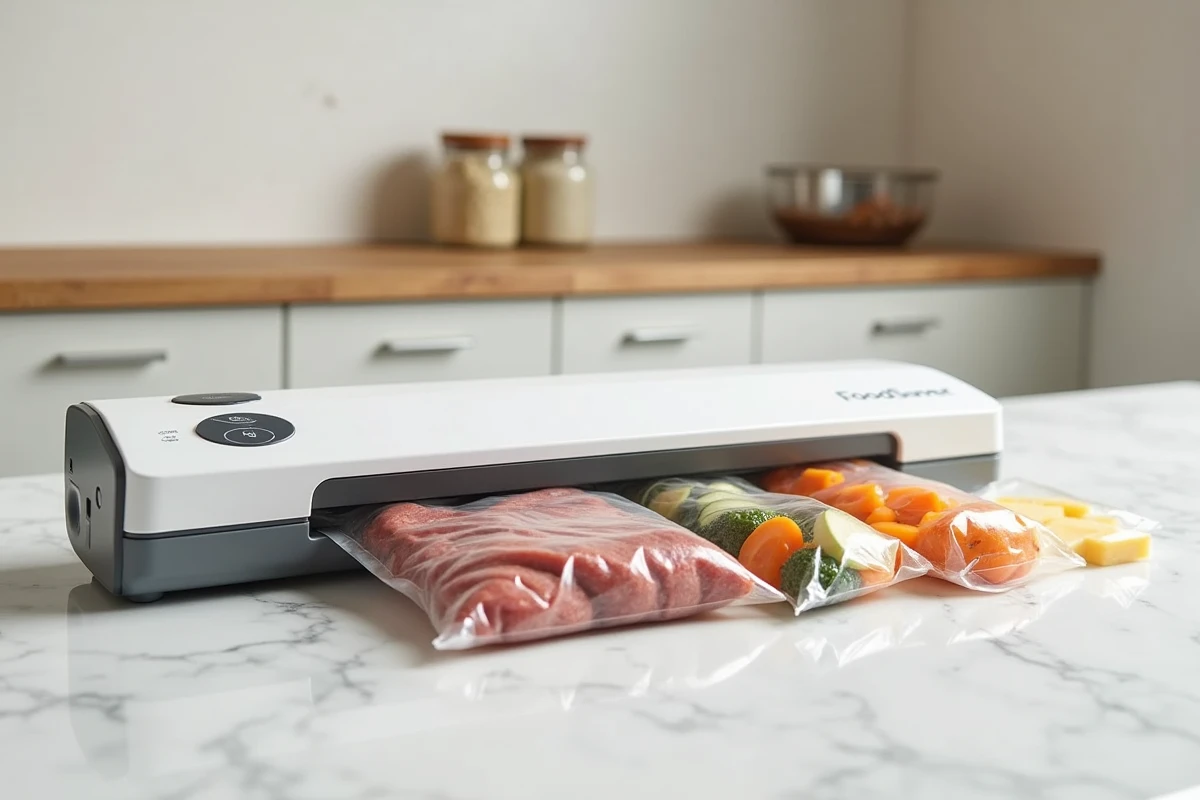
The V2860 offers three suction speeds, which distinguishes it from entry-level models limited to a single setting. This adjustment capability has a direct benefit: adapting the suction strength to delicate foods (ripe fruits, bread, chips) without crushing them.
On the quality of sealing, feedback is consistent. The sealing bar produces a regular and airtight seal in the vast majority of cases. The sealing failures reported by some users mainly concern two situations:
- A fold in the bag at the sealing area, often caused by poor initial positioning
- The presence of liquid or residual moisture on the sealing area, preventing proper fusion of the plastic
- Wear of the sealing strip after several hundred cycles, a consumable rarely mentioned but replaceable
The hands-free option is a real asset for batch vacuum sealing sessions. It allows the suction and sealing to be initiated without holding the lid, freeing both hands to prepare the next bag. For those who regularly freeze portions of meat or vegetables, the time savings are significant.
Positioning of the V2860 in the current FoodSaver range
The V2860 is now an older model. FoodSaver has since launched more compact series (FFS, VS ranges), which are less energy-consuming and equipped with specific modes absent from or less developed in the V2860: dedicated delicate food mode, quick marinade function with built-in timer.
This does not mean that the V2860 is functionally outdated. Its mechanical robustness and the power of its pump remain superior to several recent models positioned at the entry level. However, its footprint is significantly larger than that of the new series. The vertical storage via the hinge partially compensates for this flaw, but the device requires considerable counter space during use.
For a buyer who is hesitating between a used V2860 and a recent mid-range model, the question arises in these terms: the V2860 offers more powerful suction and a sturdier construction, but it lacks the software refinements and compactness of devices designed after it.
Food contact materials and current standards
One aspect absent from most existing tests concerns the materials of the bags in direct contact with food. Current FoodSaver bags are advertised as BPA-free, in accordance with regulatory developments on food plastics. Generic rolls, on the other hand, do not all explicitly display this certification.
For use involving sous vide cooking (low temperature), the composition of the plastic becomes a parameter not to be overlooked. Not all vacuum sealing bags are suitable for prolonged temperature increases. Checking for the mention “suitable for cooking” on the packaging remains the only reliable precaution.
Concrete limits of the FoodSaver V2860 in daily use
The V2860 is designed for home use. Users who use it intensively (several dozen bags per session, use in small catering) report heating of the sealing bar that necessitates breaks between cycles. This is not a manufacturing defect, but a design limitation related to the consumer positioning of the device.
- The noise of the pump, although moderate, becomes noticeable during prolonged sessions
- The integrated roll compartment facilitates cutting but only accepts standard width FoodSaver rolls
- The absence of a manual “pulse” mode on some versions forces users to choose from the three predefined speeds, without fine control of the suction in real time
A reliable device for regular home use, but not designed for semi-professional rhythms. Field feedback varies on the lifespan of the pump beyond several years of intensive use, without a reliable average duration being determinable.
The FoodSaver V2860 remains a proven device in the home segment. Its suction power, sealing quality, and compatibility with the brand’s recent accessories allow it to maintain real relevance, even against newer models. The main trade-off concerns its bulk and the absence of certain comfort functions that have appeared since in the FoodSaver range.