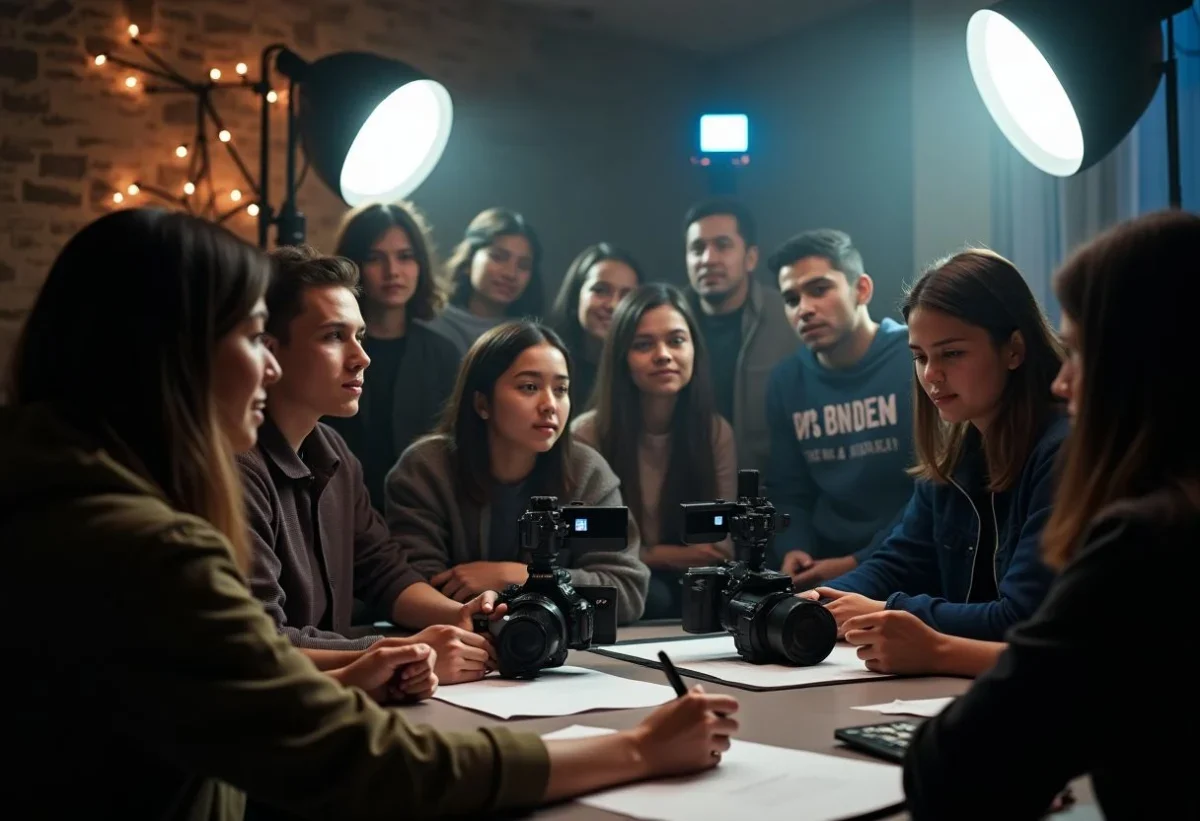
The audiovisual school is a place of learning where creativity and technology intertwine to give birth to the magic of cinema and digital media. Students navigate a dynamic world, where every frame, every sound, every light tells a story. In France, audiovisual education has flourished thanks to a unique blend of artistic tradition and technological innovation. The training offered in these schools goes beyond theory; it immerses students in real environments, allowing them to master the tools and techniques necessary to shine in the industry.
The professions in audiovisual
Working in audiovisual is opening the door to a variety of professions where each role has its own importance and unique contribution to the final work.
- Director: the conductor of the film set, the one who interprets the script and guides the entire team to bring the story to life.
- Editor: they assemble the filmed sequences to create the rhythm of the narrative, working closely with the director to realize their vision.
- Sound engineer: they capture and manipulate sounds, ensuring that every line and every musical note is clear and impactful.
- Director of photography: responsible for the visual aesthetics, they choose the angles, lights, and colors that support the storytelling.
The importance of technical training
Technical training is essential in the field of audiovisual, as it allows students to handle cutting-edge tools necessary to realize ambitious projects.
In an Audiovisual School, students are trained to use modern equipment such as high-definition cameras, video editing software, and sound systems. This technical mastery gives them the flexibility needed to adapt to all kinds of productions, whether they are films, television series, or digital content.
By practicing on professional equipment, students gain the confidence and skills required to meet the creative challenges of the audiovisual industry.
The artistic skills developed
In addition to technical skills, audiovisual training emphasizes the artistic development of students, thus preparing them to become visionary creators.
Students are encouraged to explore and refine their artistic sense through courses in screenwriting, directing, and art direction. These disciplines require a deep understanding of storytelling and a sensitivity to aesthetic details that captivate the audience. The emphasis on creativity fosters the emergence of new ideas and perspectives, essential for innovating and standing out in an ever-evolving sector.
By combining their technical and artistic skills, students are better equipped to make significant contributions to the audiovisual industry.
Career prospects after an audiovisual school
A degree in audiovisual opens the way to an exciting and varied career, with opportunities as vast as the world of entertainment itself.
- Working in renowned film and television studios, collaborating on productions that captivate the entire world.
- Joining advertising agencies, where audiovisual creativity is essential for designing impactful campaigns.
- Participating in the creation of digital content for streaming platforms, where innovation and flexibility are key.
- Engaging in independent projects, where creative freedom allows for the realization of bold and personal works.