
Icing sugar does not tolerate humidity. A still-warm cake or a slightly damp surface transforms the white powder into a translucent crust or droplets. Applying it to a perfectly dry base limits this phenomenon, but some ingredients slow down melting, while others accelerate it.
The timing and technique influence the hold of the icing. Some pastries require a dusting just before serving, while others benefit from prior preparation. The addition of starch or specific fats also alters the adherence duration of icing sugar, without affecting its appearance or taste.
Understanding the secrets of icing sugar that truly holds on your pastries
Icing sugar, discreet yet remarkably effective, adds flair to homemade pastries. However, a hasty gesture, a still-warm cake, and everything disappears: the powder vanishes, the decoration collapses. To keep this white veil intact, one needs composure and a hint of method.
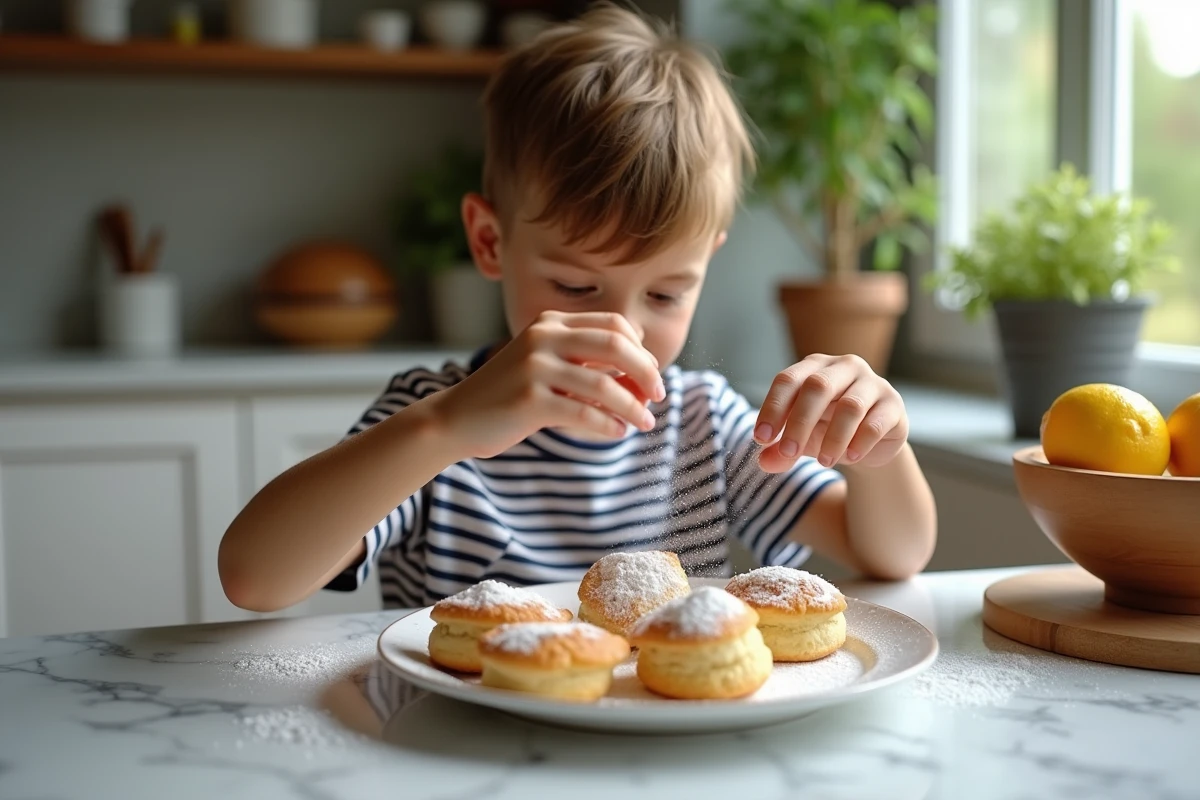
The first reflex: wait for the cake to cool completely. As long as the slightest warmth persists, the sugar absorbs moisture and melts before your eyes. Therefore, let the pastry rest at room temperature until the crust feels dry to the touch. At the moment of dusting, a fine sieve makes all the difference: the powder spreads without clumps, and the effect is sharp. If you want to enhance the hold, mix a bit of cornstarch with the icing sugar: this simple gesture slows down melting and prolongs the white magic.
To avoid disappointments, always store icing sugar in an airtight jar, away from humid air. A quick pass through the blender just before use ensures a perfectly fine powder, without unpleasant lumps. These seemingly trivial precautions, however, determine the final appearance of your cakes.
Among the techniques for fixing icing sugar, some pastry chefs do not hesitate to first apply a thin film of melted butter or jam on the cooled surface. After drying, this invisible support prevents the sugar from becoming damp upon contact with the cake. Another approach: dust just before serving, to guarantee a bright decoration and a texture that remains intact until tasting.
Ultimately, achieving a dusting is not simply shaking a sieve. It’s about observing, measuring, and starting over if necessary, so that each slice reveals the lightness of a cloud frozen in time.
What types of icings and decorations to enhance your homemade cakes?
Daring different icings gives a signature to each cake. Depending on the occasion, the choice of glaze changes the appearance and pleasure in the mouth. One can opt for the hypnotic shine of a mirror glaze, the powdered finish of icing sugar, or the comfort of a smooth chocolate glaze.
To achieve a uniform finish, rely on the classic recipe: icing sugar and a few drops of lemon juice. The mixture, spread with a spatula over the cooled cake, dries in the open air. The result: a thin film, crunchy under the bite, that catches the light.
Those who enjoy more enveloping textures will appreciate chocolate glaze. Melted chocolate, a touch of cream for smoothness, and you’re done. Pour over the cooled cake, let it set: the coating hardens, shiny and indulgent. For a spectacular effect, mirror glaze requires a bit more precision: water, sugar, gelatin, then chocolate or coloring as desired. A single pour is enough to reveal a perfect, almost hypnotic reflection.
Finishes matter. With a piping bag, draw swirls, create sugar pearls, or sprinkle with candied fruits for a contrast of textures. A few drops of food coloring transform the palette: from the softest pastels to the brightest colors, each cake becomes unique. And for the final touch, a dusting of icing sugar just before serving highlights the freshness and delicacy of the pastry, without masking the intensity of the chosen glaze.
Practical tips and chef’s tricks for an irresistible presentation on every occasion
Caring for the presentation of a cake means adhering to some practices honed by experience. First, always work on a well-chilled base: room temperature ensures that the icing sugar remains dry and does not turn into syrup. Place the cake on a rack, allowing it to cool without haste. This resting time stabilizes the icing and allows the texture to firm up.
Before dusting, take the time to sift the icing sugar. This avoids clumps and ensures a light, well-distributed layer. Use a sieve or a fine strainer, making a wide and steady motion above the cake. For a more graphic decoration, use stencils: geometric patterns, lace, everything is possible to create contrast and catch the eye.
Here are some gestures to adopt to enhance the presentation and hold of your pastries:
- Store the cake away from humidity and odors: an airtight jar or a dome will block air variations.
- Dust the icing sugar just before serving: this way, it retains its shine and won’t melt prematurely.
- To achieve a hard glaze, let the pastry dry at room temperature, uncovered, until the crust is firm.
Everything hinges on the precision of the gesture: a cold cake, fine powder, thoughtful storage. The key: a neat, indulgent presentation that irresistibly attracts the hand and eye. Icing sugar does not deceive: it reveals the chef’s talent in simplicity, slice after slice.