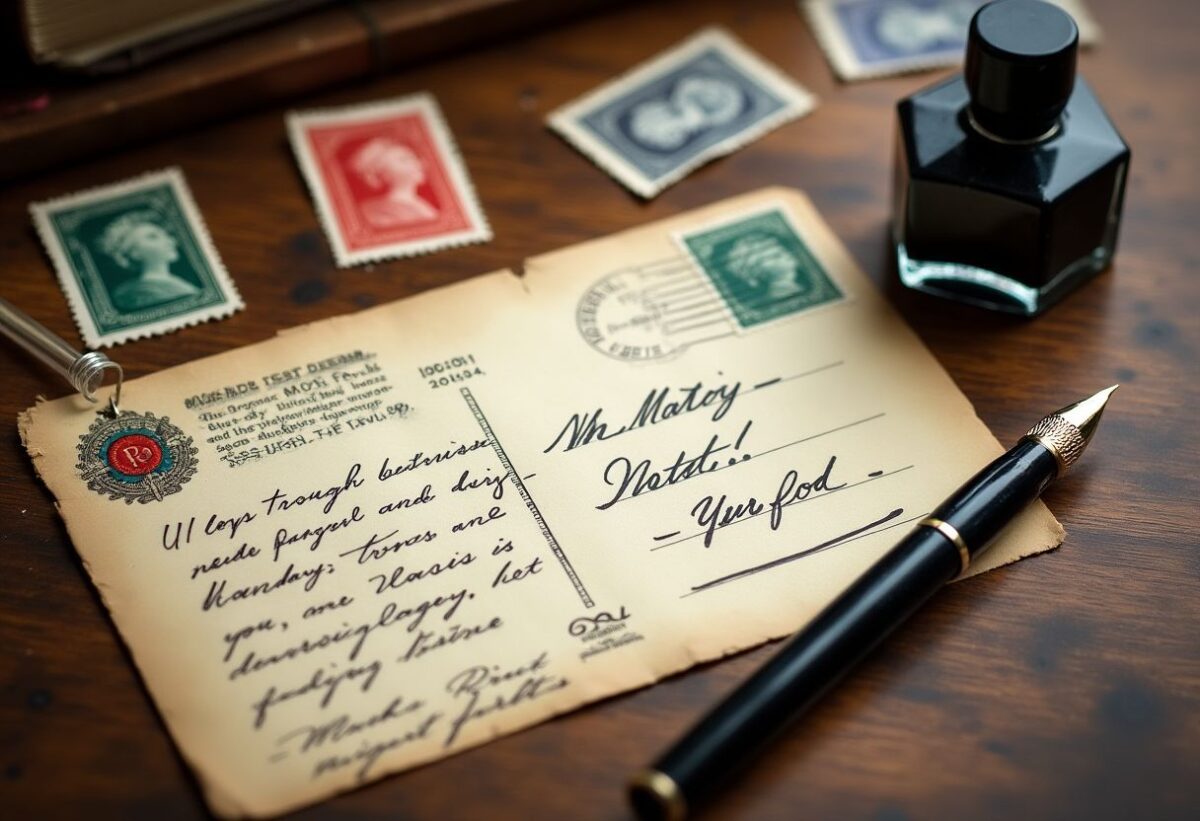
In a world where digital communications dominate, rediscovering the simplicity of a card to send becomes an act of silent rebellion. Far from the ephemeral immediacy of electronic messages, a card invites a journey of contemplation, word choice, and attention to detail. The mere act of selecting a card, writing words by hand, and sending it through the mail transforms an intention into a lasting memory. Receiving a card evokes a unique emotion, often more memorable than the fleeting likes and impersonal notifications from our digital devices.
The history and evolution of postcards
The concept of the postcard dates back several centuries, reflecting the evolution of communication methods over time. Each step in this evolution bears the imprint of the cultural and technological changes of its era.
- The beginnings: Antiquity offers us the first examples of correspondence in the form of clay tablets. At that time, handwriting was reserved for the elite and often served to convey commercial or political information.
- The rise of paper: With the invention of paper, correspondence became more accessible. Handwritten letters began to circulate, and the first forms of cards appeared.
- The era of postcards: In the 19th century, postcards experienced a true boom. They became a popular and inexpensive means of communication for the general public.
- The digital transition: The advent of the Internet has transformed the way we communicate, but postcards retain their charm and continue to captivate with their authenticity.
The symbolism of cards: much more than just words
When choosing a card, every element, from the paper to the ink, conveys a message. It is a ritual laden with symbols that speaks volumes about the connection between the sender and the recipient.
First, the choice of the design on the card often reflects the tastes or interests of the recipient, creating an immediate personal connection. Then, the carefully chosen words reveal particular attention and sincere intention. Finally, the simple act of writing by hand gives an intimate and personal dimension, immortalizing a thought or emotion felt at a specific moment.
Why send cards in the digital age?
In a universe saturated by technology, the decision to send a card to send is a significant act that goes far beyond a mere tradition.
- Creates an authentic connection. Cards do not get lost in an endless news feed; they are kept, displayed, cherished.
- Offers a sensory experience. The feel of the paper, the smell of the ink, the sound of opening the envelope: a card engages the senses.
- Expresses a thoughtful sentiment. Unlike a digital message, a card requires time and reflection, demonstrating sincere thoughtfulness.
- Returns to the roots. In a constantly evolving world, reconnecting with this form of traditional communication offers a welcome pause.
How to write the perfect card?
Creating an unforgettable card requires particular attention to detail, ensuring that every element is in harmony with the message you wish to convey.
First, start by choosing the right medium. The paper, its thickness, its texture, everything should match the occasion and your personal style.
Next, opt for a writing style that reflects your personality while remaining legible. Using colored ink can add a personal touch that will delight the recipient.
Finally, consider adding a small drawing or symbol that will make your card unique.