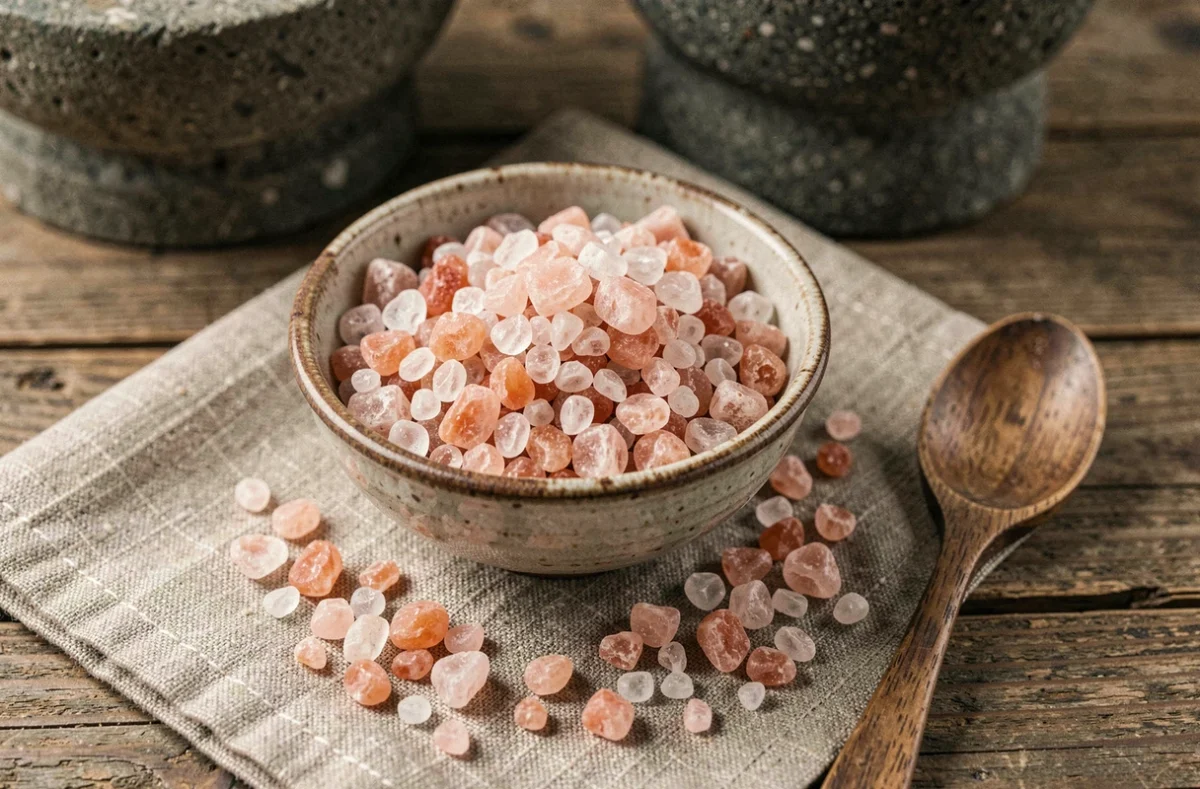
Himalayan pink salt contains between 95 and 98% sodium chloride, a proportion comparable to that of white table salt. The minerals that give it its color (iron, manganese, magnesium) are present only in trace amounts, far too small to meet daily nutritional needs. When discussing pink salt in cooking or cosmetics, it is important to distinguish what its chemical composition actually supports from what marketing suggests.
Lead contamination and heavy metals in pink salt: what the analyses show
A comparative review of 31 pink salt samples found varying mineral levels from one batch to another. One sample exceeded the Australian limit for lead in food-grade salt. This finding does not mean that all pink salts are contaminated, but it does highlight a traceability problem.
Other batches tested contained detectable levels of arsenic, cadmium and mercury. The key issue is the variation between products: two bags of pink crystals bought from different retailers may have very different contaminant profiles.
Color tells you nothing about purity or heavy metal content. Deep pink salt is no richer in useful iron than pale pink salt, and it is not necessarily more contaminated either. Only batch testing can provide a definitive answer.
In practice, we recommend choosing a product with an identifiable batch number and a clearly stated country of origin. The benefits and risks of Himalayan pink salt depend largely on this traceability, far more than on grain size or an organic label.

Pink salt and iodine: an underestimated risk of deficiency
Pink salt is generally not iodized. If you replace iodized table salt with it in all your cooking, your daily iodine intake will drop, sometimes significantly. This is rarely mentioned on packaging.
Iodine is involved in the production of thyroid hormones. A prolonged deficiency can lead to goiter, chronic fatigue or developmental problems in children. At-risk groups (pregnant women and people who eat few seafood products) are most affected.
Before replacing iodized salt with pink salt, check the packaging for the word “iodized.” If it is absent, there are two options:
- Alternate between pink salt and regular iodized salt to maintain a minimum daily iodine intake
- Make up for it with iodine-rich foods (seaweed, sea fish, dairy products)
- Ask your doctor about a urinary iodine test if you have used only non-iodized salt for several months
Blood pressure and pink salt: no evidence of therapeutic benefits
A small clinical trial compared the effects of pink salt and white salt on blood pressure. Its limited sample size and duration did not allow researchers to identify any significant difference. Pink salt does not lower blood pressure compared with white salt.
The marketing argument is based on flawed logic: because pink salt contains traces of potassium and magnesium, it supposedly “counteracts” sodium’s blood-pressure-raising effect. In reality, the amounts of these minerals are negligible compared with recommended intakes. A few milligrams of potassium in a pinch of salt are no match for a banana or a serving of lentils.
For people following a low-sodium diet, the rule is the same regardless of the type of salt: limit the total amount consumed. Switching one type of salt for another without reducing the amount offers no protection for the cardiovascular system.
Microplastics in pink salt crystals: an emerging concern
Analyses have detected microplastic particles in pink salt, at concentrations higher than those found in other types of salt. Available data report more than 170 particles per kilogram in some batches.
The long-term health effects of ingesting microplastics are still being evaluated. Suspected mechanisms include endocrine disruption and chronic inflammatory responses. The salt’s origin (open-pit mine, packaging, transport) plays a role in its level of contamination.
This issue is not limited to pink salt. Fleur de sel, grey sea salt and refined table salt also contain microplastics, in varying amounts. Pink salt is therefore not unique, but the higher concentrations found in some batches are worth noting.
Practical precautions for choosing and using pink salt in cooking
Pink salt is a seasoning, not a dietary supplement. Its slightly different flavor from table salt (less sharp, with a mineral note) makes it useful in cooking for taste, not therapeutic reasons.
- Always check the country of extraction and batch number on the packaging, and favor products whose suppliers publish test results
- Do not exceed the recommended amount of salt on the assumption that pink salt is “more natural”: sodium is still sodium
- Avoid using pink salt blocks as cooking slabs unless you have confirmed that they are certified food-grade
- Do not attribute detoxifying properties to pink salt baths: the relaxing effect is real (warm water, osmosis), but it is not specific to this type of salt
Pink salt often costs ten to twenty times more than table salt in Europe, but the price does not reflect a proportional nutritional benefit. The cost is due to the supply chain (mining in Pakistan, packaging, marketing), not superior safety or quality. Local, iodized and traceable sea salt serves the same culinary purposes at a lower cost and provides a guaranteed source of iodine.