In France, couples getting married today are spending more per guest while keeping their guest lists smaller, according to Mariages.net’s 2026 Wedding Industry Report. This shift reflects a change in priorities: fewer guests, but a more carefully curated experience for each one. Planning a wedding means navigating administrative requirements, choosing a venue, managing the budget and coordinating vendors, with timelines that are sometimes underestimated.
Legal timelines and civil formalities before the wedding ceremony
Before thinking about decorations or the playlist, couples often run into one major constraint: the timeline set by the town hall. Under French law, the banns must be posted for ten days before the wedding ceremony. The wedding cannot take place before the tenth day following their publication.
The application is submitted to the chosen town hall, and the required documents vary depending on the circumstances of the future spouses (nationality, residence, previous marriage). It is wise to contact the town hall several months in advance to find out exactly what it requires. A delay in preparing the application can push back the ceremony date, creating a domino effect on bookings for the reception venue and vendors.
This administrative step, often left until the end of the to-do list, deserves to be handled first in the planning timeline. Couples who book a venue or caterer before confirming the date with the town hall risk having to reschedule everything.
Wedding budget: a contingency fund makes all the difference
Couples often exceed their planned budget during the preparations, according to data collected by Mariages.net from couples who married in 2025. This makes it important to build a contingency fund into the plan from the outset, rather than relying on a theoretical budget with no safety net.
Several expense categories are often underestimated at first. To avoid unpleasant surprises, it helps to identify the most variable costs before signing any contracts:
- The reception venue, whose price can vary significantly depending on the season, day of the week and region
- The caterer, where the cost per guest can quickly rise when you add options (an extended cocktail reception, a children’s menu, a dessert bar)
- Photography and videography vendors, whose packages can vary threefold depending on coverage time and included deliverables
- Often-overlooked additional costs: tips, accommodation for out-of-town guests, shuttles and venue administration fees
Rather than setting an overall budget and then dividing it up, a reverse approach works better: first price out the three top priorities (venue, caterer, photographer), then allocate the rest. The resources available on the Les Secrets de la Mariée website can help you explore different vendor categories and refine these estimates.
Personalizing the day: where does inspiration end and one-upmanship begin?
An October 2026 report by Famille Chrétienne describes the growing pressure on couples to plan an “Instagrammable” wedding. Personalization, presented as an ideal, can also become a financial and logistical trap when every detail has to be unique.
The line between a wedding that feels like you and one designed for the photos is not always clear. A few warning signs are worth watching for: when the décor budget exceeds the catering budget, when choices are driven by online trends rather than genuine preferences, or when the day’s schedule leaves the couple with no downtime at all.
A personalized wedding doesn’t mean everything has to be handmade. It means making choices that reflect the couple’s priorities. A couple who loves music might invest in a live band rather than elaborate centerpieces. Another might prefer an exceptional venue with minimal décor.
High-impact, low-cost ways to personalize your wedding
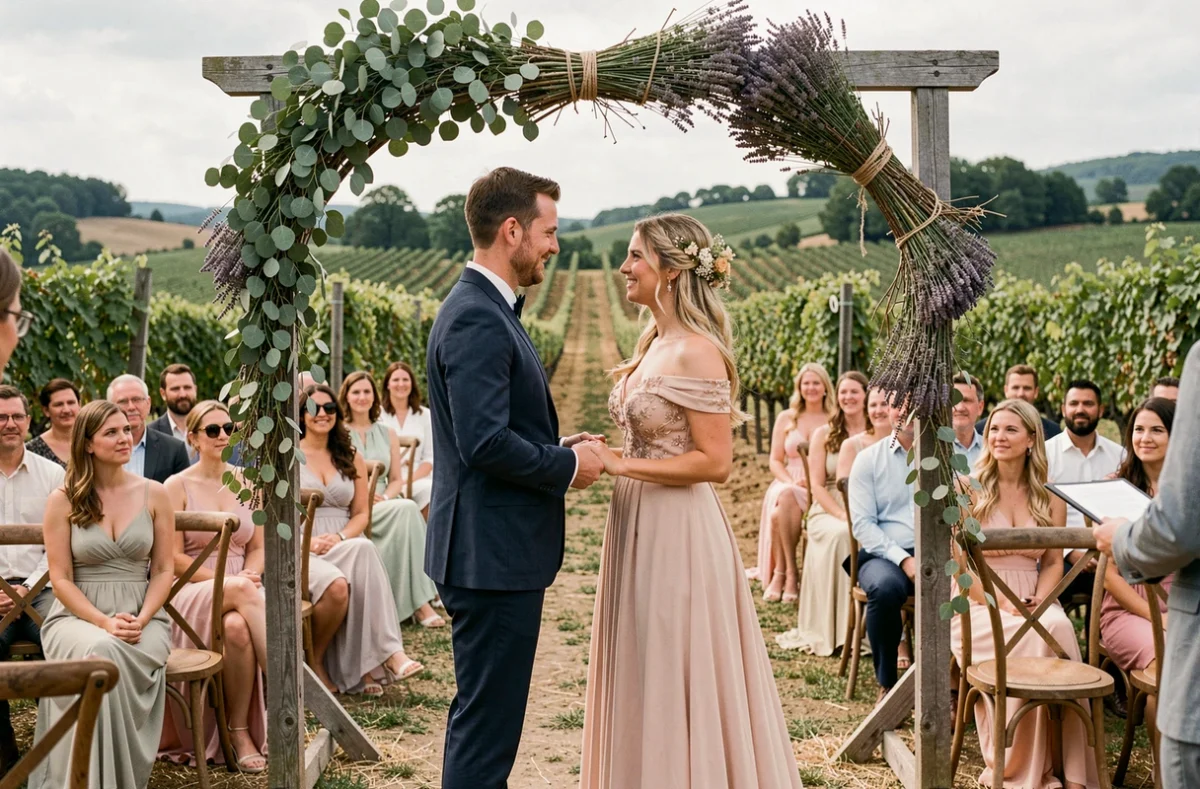
A non-religious ceremony remains one of the most powerful ways to personalize a wedding. Writing your own vows, choosing readings that mean something to you as a couple, asking a loved one to officiate: these choices cost nothing and make a greater impression on guests than a floral arch costing several thousand euros.
The seating plan, often a source of stress, can also be an easy way to add a personal touch. Naming tables after places you’ve traveled together, films or shared memories creates a warm atmosphere without stretching the budget.
Wedding planning timeline: the most common sequencing mistakes
Most guides offer a linear planning timeline (12 months out, 6 months out, and so on). In practice, the order in which you make decisions matters just as much as the timeline. For example, booking a photographer before deciding how the day will unfold can mean paying for a package that doesn’t suit your needs.
Three decisions determine all the others and should be made first:
- Confirming the date with the town hall, which everything else depends on
- Choosing the reception venue, which determines guest capacity, the style of the day and a significant part of the budget
- Deciding on the guest count, which directly affects the caterer, venue size and overall budget
Once these three cornerstones are in place, all the other decisions (photographer, florist, DJ, stationery, guest favors) can be organized in parallel. Locking in these three choices avoids a cascade of changes to contracts that have already been signed.
Coordinating vendors on the big day
One point that is rarely discussed is communication between vendors. The photographer needs to know the exact ceremony schedule. The caterer needs to know when the cocktail reception starts. The DJ needs to time transitions around the dinner schedule. Without a shared document (a simple spreadsheet with timings, contacts and responsibilities), delays start to pile up.
Appointing a coordinator, even informally (an organized member of the wedding party or a family member), to handle calls on the big day frees the couple from a considerable mental load.
Wedding planning works best when approached as a project with fixed constraints, rather than as a collection of inspirations to piece together. The official date, venue and guest count form the foundation. Everything else should be tailored to the actual budget, the couple’s preferences and the time available—not to a one-size-fits-all checklist.