
The online plant sales market has taken shape in recent years around several business models: established garden retailers, florist networks, and specialist short supply-chain platforms. Advertised delivery times range from a few hours to several days, depending on the retailer and the delivery area. Behind the promise of easy ordering and fast delivery, several factors are worth considering before you check out.
Plant passports and the origin of plants ordered online
Fast delivery often obscures a regulatory issue that few buyers consider. For plants shipped from another European Union country, the Ministry of Agriculture states that the plants concerned must travel with a plant passport. This document certifies that the plant has been inspected and poses no health risk to local flora.
Shipments from non-EU countries are subject to stricter rules, and some species simply cannot enter France without a certificate or specific inspection. On online stores, this information is not always visible on the product page. A seller who clearly states where its plants come from and confirms their phytosanitary compliance offers an initial sign of reliability.
If a houseplant is offered at a price well below the market rate, it may be worth checking whether it passes through a third country before arriving in France. Unlike online nurseries or specialist retailers such as Botanic or La Green Touch, general marketplaces do not always guarantee this level of traceability.
Right of withdrawal and live plants: what the law says
Ordering a plant online falls under standard e-commerce rules, but the nature of the product changes the legal picture. The law provides an exception to the right of withdrawal for goods liable to deteriorate or expire rapidly. A live plant may fall into this category.
In practical terms, this means buyers cannot always return a plant within fourteen days as they would a ceramic pot or a garden accessory. It is therefore wise to check the seller’s terms and conditions before placing an order. Most specialist websites do, however, offer commercial guarantees if a plant arrives damaged, with a replacement or refund, but these arrangements are at the seller’s discretion.

Several retailers set a reporting window—often a few working days after delivery—for notifying them of a problem. Missing this deadline generally means losing any right to a remedy. Checking this clause before completing an online plant order can help avoid a dispute that may be difficult to resolve later.
When exploring options for fast home delivery of plants, several practical factors come into play beyond the legal framework alone.
Express plant delivery: what really determines the delivery time
Delivery times shown on retail websites should be read carefully. A stated “24 to 48 hours” often refers to transit time alone, excluding order preparation and non-working days. Some retailers, such as Bergamotte, offer same-day delivery in Paris, but this speed relies on local stock and a network of partner florists—a model that is difficult to replicate across the entire country.
Large houseplants (monstera, ficus, areca) and trees or shrubs intended for the garden require suitable packaging and delivery by a specialist carrier. The actual delivery time depends as much on logistics as on distance.
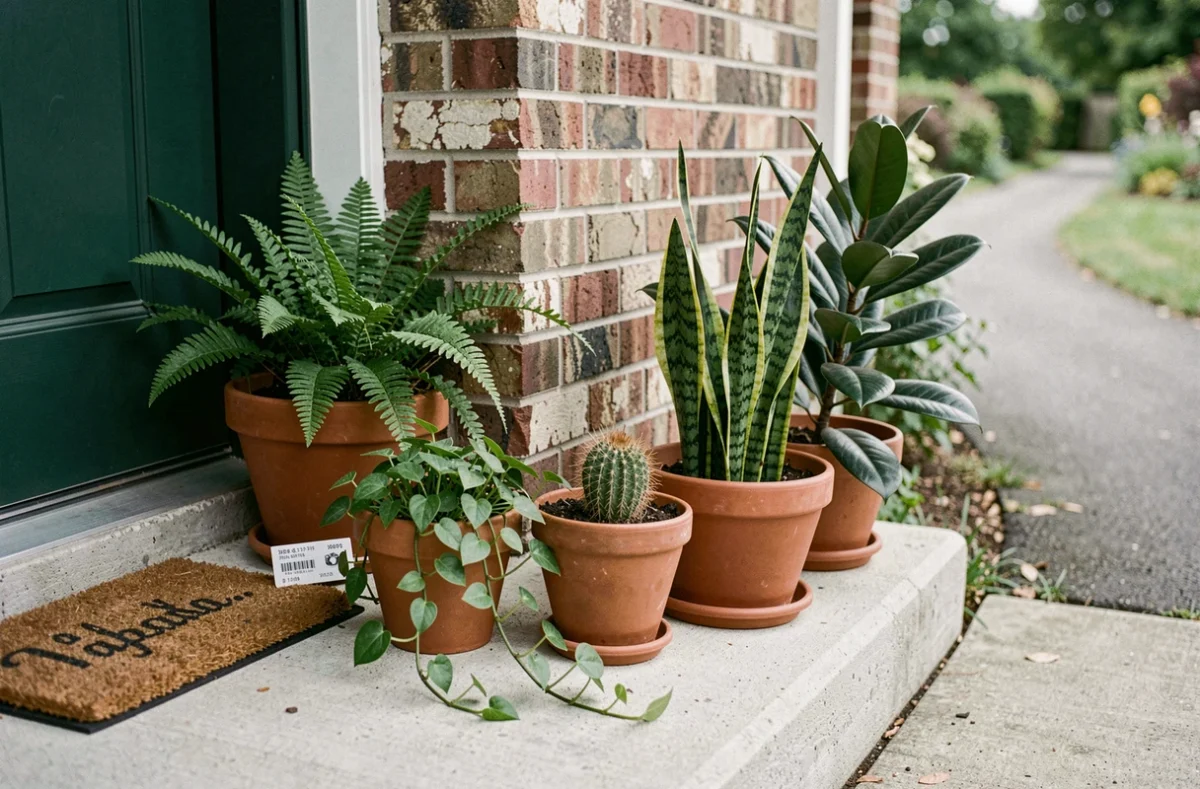
Scheduling delivery for a day when you will be home is the most effective precaution. A plant left for several hours at a collection point or on a doorstep, exposed to winter cold or summer heat, may arrive in irreparable condition. No commercial guarantee can make up for prolonged exposure to extreme temperatures during transit.
What to check before completing your order
- The shipping method offered: standard Colissimo, a carrier specializing in plants, or delivery by a local courier. Each involves different transport conditions and delivery times.
- The replacement policy if an item is broken or a plant arrives in poor condition, and the deadline set by the seller for reporting the issue.
- Whether you can schedule a specific delivery date, to prevent a parcel from being left in a warehouse or collection point.
- The packaging described on the website: a reputable seller will specify the type of protective packing used to safeguard roots and leaves during transit.
False urgency and limited stock: pitfalls of online plant shopping
Countdown timers (“order in the next 2 hours for delivery tomorrow”) and limited-stock notices (“only 3 left in stock”) are persuasion tactics governed by legislation on misleading commercial practices. Creating false urgency online is an offence when the information displayed does not reflect actual stock levels or delivery times.
These tactics are common in the online plant sector. A website that constantly displays “last items available” across most of its catalogue is probably using a marketing ploy rather than accurately reflecting its inventory. Retailers that work directly with growers, such as La Green Touch, face genuine stock constraints linked to growing seasons, making their availability information more reliable.
To tell a genuine stock shortage from a sales tactic, check the same product several days apart. If the countdown resets or the “limited” stock never changes, it is best to be cautious.
Acclimating a plant after home delivery
Receiving the parcel is not the end of the process. A delivered plant needs time to acclimate gradually to its new environment. Placing it straight in direct sunlight or next to a radiator after a journey in a dark box can cause water and light stress, potentially weakening it for a long time.
The usual recommendation is to leave the plant for a few days in a bright spot without direct sunlight, at a stable room temperature. Water it sparingly at first: the growing medium is often moistened before shipping so it can last throughout the journey.
Tropical houseplants (monstera, calathea, ficus) generally handle transport better than flowering plants or delicate species. For a first online purchase, choosing a hardy species reduces the risk of disappointment and lets you test the seller’s reliability before ordering varieties that require more care.
Ultimately, choosing an online plant retailer depends less on the advertised delivery time than on the seller’s transparency: where the plants come from, the terms of any guarantee, and the quality of the packaging. A parcel delivered in 48 hours with a well-protected, clearly documented plant is better than an express delivery where the plant arrives stressed and with no possible recourse.