
The SoC conditions daily experience more than the marketing specifications suggest. In 2026, the best smartphones stand out less for their raw power than for thermal management, the efficiency of the NPU for embedded AI tasks, and the quality of the photo processing pipeline. Here, we break down the criteria that really matter for choosing a model suitable for demanding use.
Thermal management and throttling: the true indicator of smartphone performance
A Snapdragon 8 Elite or an A18 Bionic shows similar synthetic scores in single-core benchmarks. The difference lies in the duration of performance maintenance under sustained load.
The Samsung Galaxy S26 Ultra and Google Pixel 11 Pro models adopt expanded surface vapor chambers, but their throttling strategies diverge. Samsung gradually reduces frequencies after several minutes of intense gaming, while Google opts for a more aggressive early capping that keeps surface temperature below 42 °C.
To objectively compare these behaviors, we recommend consulting standardized testing protocols on https://www.smartphone-test.fr/ rather than relying on instantaneous scores. A smartphone that maintains 80% of its performance after twenty minutes of stress is better than a model that shows a spectacular peak before collapsing.
Prolonged throttling degrades the experience more than the choice of SoC itself. This is a point that mainstream comparisons consistently underestimate.
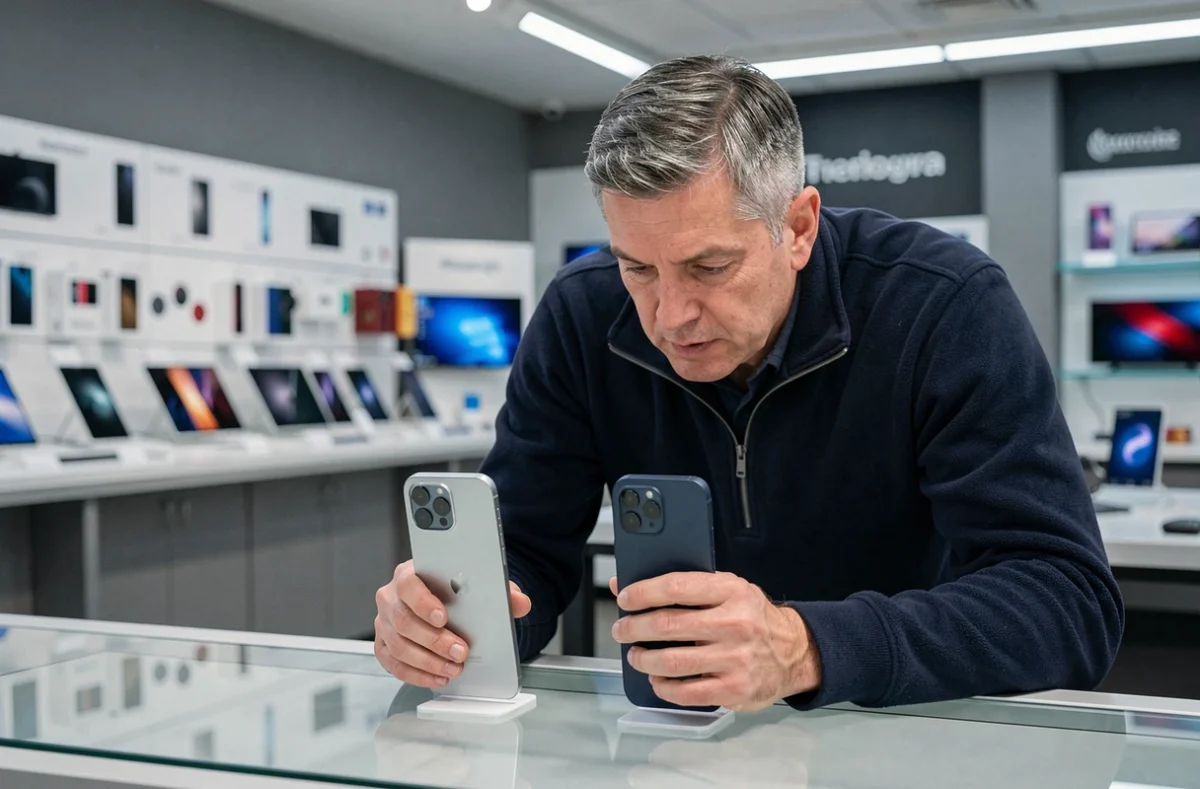
Real repairability of smartphones in 2026: beyond the displayed index
Since June 20, 2025, smartphones sold in the European Union must display a repairability index and provide access to repair information as well as spare parts pricing. The regulation exists, but its application remains patchy.
An analysis published by iFixit on October 2, 2026, shows that only about 18% of the 2,334 references examined actually link to usable information. Nearly half of the listings contain no links to repair documentation. Therefore, the score displayed in stores does not reflect the actual ease of getting the device repaired.
The case of foldable smartphones
Foldable models pose a structural problem. According to iFixit, hinges are a major vulnerability point, and replacing the internal screen on a device like the previous generation Pixel Fold requires more time and skills than a standard screen.
We observe that foldables are still not recommended for users who keep their devices for more than three years. The cost of repairing the folding screen can exceed the residual value of the phone after two years of use.
- Check the actual availability of spare parts on the manufacturer’s website before purchase, not just the repairability score
- Prefer brands that publish official disassembly guides (Fairphone, Google, Samsung on certain models)
- Anticipate the cost of replacing the screen and battery, the two most common repairs over a smartphone’s lifespan
5G coverage in France: a criterion often overestimated
The embedded 5G modem guarantees nothing if the user lives or works in a poorly covered area. Arcep, in its observatory published on September 24, 2026, specifies that commercial deployments are evolving rapidly and recommends consulting the coverage maps specific to each operator.
Paying a premium for a 5G model without checking local coverage is like buying a ghost feature. In rural or suburban areas, a high-performing 4G+ model with a better camera sensor or a more generous battery often represents a more rational choice.
The iPhone 16 and Galaxy S24 remain available refurbished at significantly lower prices than their successors, with identical 5G compatibility. The performance gain between these generations does not always justify the price difference for everyday use.
Smartphone photography: main sensor, software processing, and real conditions
The race for megapixels has given way to competition in computational processing. Google, Apple, and Samsung use radically different approaches.
The Pixel 11 Pro relies on a dedicated NPU that stacks more frames in low light and applies noise reduction through semantic segmentation. The result: more detailed night shots, but sometimes overly smoothed skin textures.
The iPhone maintains a more neutral colorimetry and controlled contrast, at the cost of slightly more visible noise in extreme conditions. Samsung boosts saturation and artificial sharpness, which flatters the eye on AMOLED screens but does not hold up well to cropping or printing.
Concrete criteria for evaluating photography
- Test night mode in a truly dark environment (less than 5 lux), not under urban lighting
- Compare results at native x3 and x5 zoom rather than digital zoom, which depends solely on software
- Check color consistency between the main sensor and the ultra-wide angle, often overlooked by manufacturers
- Evaluate shutter speed and HDR latency in motion conditions
A quality main sensor does not compensate for a mediocre ultra-wide angle. The versatility of the camera module as a whole takes precedence over the performance of a single lens.
Android or iOS: the ecosystem weighs more than the hardware
The choice between Android and iOS in 2026 remains primarily a software ecosystem choice. Android offers more flexibility in customization, file management, and sideloading applications. iOS retains the advantage in the duration of software support and hardware-software integration.
Xiaomi, with models like the Redmi Note 15 5G, offers an aggressive specifications-to-price ratio in the entry-level segment. The trade-off lies in the software layer: MIUI (now HyperOS) includes more ad notifications and a less predictable security update policy than Google or Samsung.
For a user who keeps their smartphone for three to five years, the guaranteed duration of security updates matters as much as the processor. Google and Apple now offer a minimum of five years, with Samsung following suit on its Galaxy S and A ranges. Other Android manufacturers lag behind on this point.