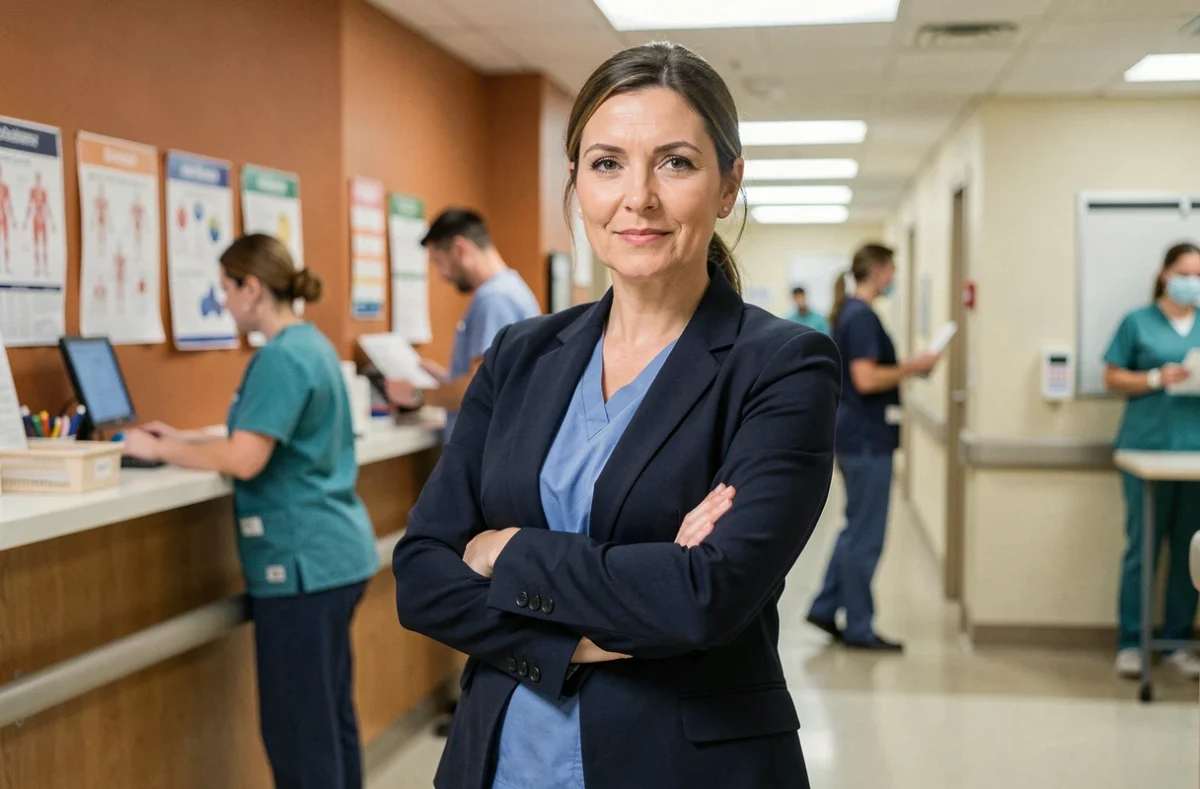
In a geriatric care center, a nursing assistant negotiates a night schedule while supervising an intern. Her position requires relational, organizational skills and real physical endurance. The payslip, however, does not reflect this reality. It is precisely this gap between the responsibilities undertaken and the recognition received that concentrates the levers for transformation for traditionally female professions by 2026.
Salary Transparency and Feminized Professions: What the European Directive Changes
There is often talk of image and communication to enhance professions predominantly held by women. However, the most concrete mechanism currently in progress concerns remuneration. The French project to transpose the European directive on pay transparency, presented in the Council of Ministers on September 10, 2026, provides for the display of the salary range as soon as the job offer is published.
For feminized professions (home help, medical secretarial, early childhood, reception), this obligation makes visible disparities that have until now been obscured by the vagueness of internal grids. When a job offer for an executive assistant shows a lower range compared to an equivalent technical position, the differential becomes public, measurable, and contestable.
The text also provides for the correction of unjustified disparities exceeding certain thresholds. We move from a subject of awareness-raising campaign to a mechanism of collective negotiation. As detailed by the RapidActu online portal, this evolution could contribute to sustainably changing the perception of these professions by linking them to their real value.

Automation by AI: Feminized Positions on the Front Line
The other ongoing transformation is not a choice but a technological constraint. Administrative, accounting, document management, and reception professions are among the most exposed to automation by generative AI. These are not marginal jobs: they represent a significant share of female work in high-income countries.
Digital Skills Development: An Operational Urgency
The image issue is shifting. Enhancing these professions is no longer enough if the positions themselves disappear or transform radically. The question becomes: how to enable women in these roles to access digital skills and the positions created by AI.
- Short training courses in advanced office skills and applied AI tools (prompt engineering, automation of repetitive tasks) allow for a transition without lengthy retraining.
- Access to digital certifications from the current position (via CPF or company workshops) avoids the professional break that many employees cannot afford.
Feedback varies on this point: some organizations have integrated these trainings into working hours, while others push them into personal time, significantly hindering adoption.
Job Classification and Collective Negotiation: The Underestimated Lever
When looking at classification grids in the public hospital service or in collective agreements in the medico-social sector, the criteria for physical hardship have historically been calibrated based on industrial-type efforts (heavy lifting, exposure to vibrations). Emotional burden, managing aggression, or working fragmented hours are not weighted in the same way.
The enhancement of feminized professions requires a rewriting of these criteria. Several professional branches have begun negotiations to integrate factors such as continuous relational load or the responsibility for vulnerable individuals into the qualification level calculation.
Recognizing Invisible Skills in Job Descriptions
A home care assistant coordinates medical professionals, manages relationships with families, and adapts her intervention to the daily health status of the beneficiary. These skills correspond to project management and crisis communication, but they do not appear in the official job description.
Reclassifying these skills in the grids changes remuneration, status, and external perception of the profession. It creates a cascading effect: when a position is better classified, it attracts a more diverse range of applications, including from men, which accelerates gender diversity.

Diversity in Construction and Industry: What the Field Numbers Show
In the industry, the proportion of women has stagnated below 30% for over a decade. Professions with high recruitment pressure (boilermaking, welding, maintenance, machining) struggle to attract female candidates.
Equipment and Working Conditions: A Concrete Barrier
Beyond representations, material obstacles persist. Personal protective equipment suited to female body types remains insufficient on many construction sites. When a helmet or harness is not the right size, the issue is not symbolic; it is a safety concern.
Structured women’s networks are developing in construction to raise these observations and influence companies’ purchasing policies. The issue is pragmatic: you do not retain an employee with equipment that does not suit her.
The transformation of the image of feminized professions by 2026 does not rely on a slogan. It plays out in publicly disclosed salary grids, renegotiated job classifications, and in effective access to training that prepares for technological changes. The professions that will succeed in this transition will be those where formal recognition has caught up with the reality of the work performed.