Finding a dress that fits well on your silhouette without spending three hours in the fitting room is the kind of constraint that shapes fashion trends for 2024 much more than runway shows. The major stylistic directions this year address concrete problems: adapting personal style to unpredictable seasons, extending the lifespan of clothing, and creating cohesive looks with fewer pieces.
Let’s take stock of the factors that are truly changing the way we dress.
Digital Passport for Clothing: What Changes for Style in 2024
Before discussing colors or cuts, we need to look at what’s happening on the regulatory side. The European Ecodesign Regulation (EU) 2024/1781, adopted on June 13, 2024, and coming into force on July 18, 2024, lays the groundwork for the digital passport for products. For textiles, this refers to a document that provides information on fiber composition, the origin of production stages, reparability, and recycling methods.
In practice, the specific delegated act for textiles has not yet been adopted. Therefore, there is no binding deadline or definitive list of required data. Feedback on this point varies among brands: some are already anticipating by integrating a QR code on their labels, while others are waiting for the final version of the text.
This movement encourages choosing pieces with known traceability. This logic is reflected on the PEPSeo fashion website, where trends incorporate this dimension of transparency into style advice. Specifically, when purchasing pants or a jacket in 2024, checking the composition and origin becomes a style reflex as much as a consumption habit.

Trendy Colors and Cuts for 2024: Focusing on the Longevity of the Look
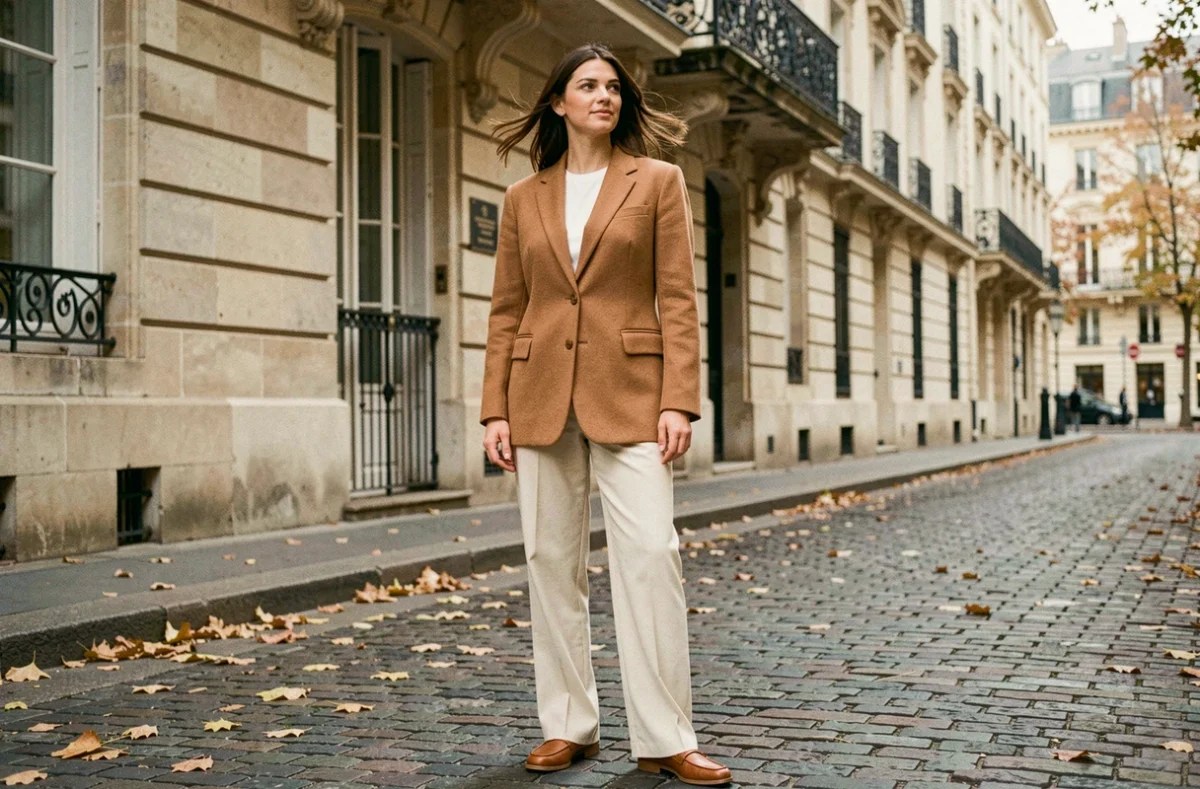
The palette for the year revolves around shades that can be worn across multiple seasons without looking out of place. Earthy tones (moka, sand, rust) dominate winter wardrobes, while faded blues and off-whites extend the transition into spring.
The advantage of these colors is that they combine effortlessly. You can create a complete look with three coordinated pieces instead of five, simplifying the wardrobe and reducing impulsive purchases.
Styles That Cross Seasons
In terms of silhouettes, the fashion trend for 2024 confirms the return of structured cuts. High-waisted straight-leg pants, slightly oversized jackets, and midi dresses form a trio that works equally well in the office and on the weekend.
A fitted cut at the shoulders and looser at the bottom remains the most wearable formula. Ultra-tight pieces that limit occasions and body types are avoided. The women’s tailored pant suit, for example, gains flexibility with fabrics that are more fluid than classic versions.
- High-waisted straight or slightly flared pants: the most versatile cut, adapting from white sneakers to heeled ankle boots
- Deconstructed linen or blended cotton jacket: ideal as an intermediate layer when temperatures fluctuate between seasons
- Three-quarter sleeve midi dress: worn alone in summer or layered with a thin sweater in winter, it covers most situations
Accessories and Personal Style: Building a Unique Look Without Accumulating
Accessories remain the most effective lever for personalizing a minimalist wardrobe. In 2024, a structured bag and a well-chosen pair of shoes are enough to transform a neutral outfit.
The classic pitfall is to multiply jewelry or scarves to compensate for overly bland basics. If your base pieces are well-cut and in colors that suit you, a single standout accessory does the job.
Choosing Accessories Based on Actual Use
We start from the concrete situation. For a workday followed by dinner, a bag that transitions from professional to casual without discomfort is a priority. A thin leather belt on high-waisted pants remains a classic that structures the silhouette better than any piece of jewelry.
- Medium-sized crossbody bag: large enough for a compact laptop, elegant enough for the evening
- Simple geometric earrings: they add character without overwhelming, compatible with a turtleneck or a low neckline
- Contrasting belt (light on dark outfit, or vice versa): it defines the silhouette and creates a focal point without adding volume
Practical Guide: Caring for Your Clothes to Extend the Trend
The challenge of circular fashion shifts from marketing discourse to the actual lifespan of clothing. Specifically, proper care doubles the lifespan of a medium-quality piece.
Washing at low temperatures, flat drying for knits, and ironing inside out for prints are simple actions that make all the difference. You can wear the same trendy dress for three years instead of just one if you follow these basics.
Repair Rather Than Replace
Alterations at a tailor generally cost less than a new garment of equivalent quality. Adjusting the size of pants, shortening a dress, or replacing a lining allows you to keep pieces that align with the fashion trends of 2024 while avoiding the buy-waste cycle.
Once fully deployed, the European digital passport should also include information on reparability. In the meantime, we can already prioritize brands that document the exact composition of their clothing and provide precise care instructions.
The fashion trends of 2024 value a unique style based on sustainable choices rather than accumulation. Three well-chosen and well-maintained pieces dress better than a complete wardrobe renewed each season. The ongoing European regulation pushes in the same direction, and this movement will only accelerate in the coming years.