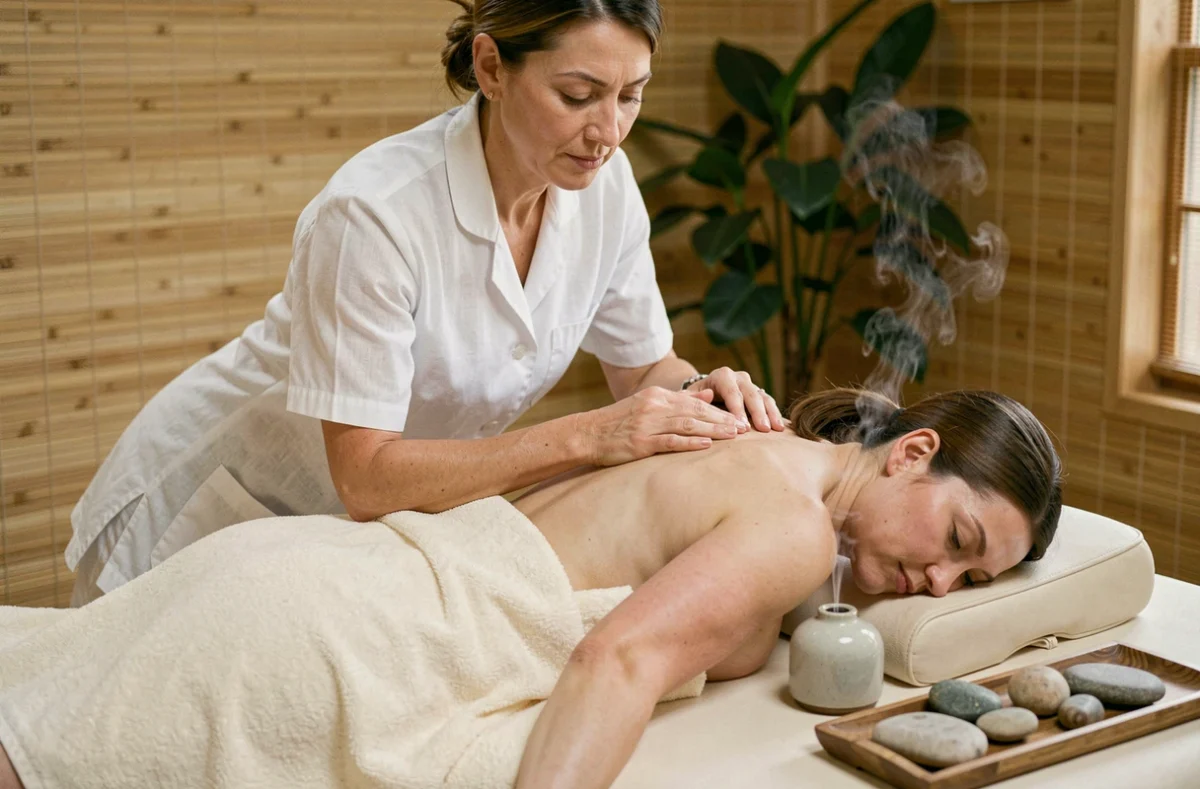
Wellness massages are the subject of an increasing number of clinical studies, but their actual effects vary depending on the technique used, the duration of the session, and the profile of the person receiving the massage. A meta-analysis published in 2024 on touch interventions confirmed favorable effects on anxiety, pain, and certain stress markers. However, a massage does not constitute a treatment for chronic stress.
What parameters are measured, and what do the available data really say?
Wellness Massage and Regulatory Framework in France
Before examining the physiological effects, an often-overlooked distinction deserves to be made. Wellness massage is not a regulated health profession in France. It does not require a state diploma, unlike therapeutic massage-kinésitherapy acts, which are governed by the Order of Massage-Kinésitherapists.
This boundary has direct consequences on what a wellness practitioner can or cannot claim. A relaxation session is not intended to treat a pathology. The practitioner works on muscle relaxation, superficial circulation, and the reduction of perceived stress, without making a diagnosis or prescribing a medical protocol.
Trained professionals offer services adapted to this framework, such as on lesmassagesdetiphaine.fr, where sessions focus on releasing tension and overall well-being without encroaching on the therapeutic field.

Measured Effects of Massage on Stress and Sleep
Recent publications allow for a comparison of the results observed on two key parameters: stress (measured through anxiety and physiological markers) and sleep quality.
| Parameter | Observed Result | Identified Limitations |
|---|---|---|
| Anxiety and stress markers | Favorable effects reported by the 2024 meta-analysis on touch interventions | A massage alone does not treat chronic stress |
| Sleep quality (insomnia) | Improvement in several sleep parameters, reduction in anxiety and depression scores (2024 meta-analysis, 23 studies, 1,780 people) | Uneven methodological quality, need for better-designed clinical trials |
| Pain | Reported reduction in several protocols | Minor adverse effects (bruising, soft tissue trauma) are documented |
Improvement in sleep is the most documented parameter in recent data. The meta-analysis involving 1,780 people suffering from insomnia shows positive results on sleep onset duration, total sleep duration, and subjective quality of rest.
However, the authors of this study themselves highlight that the sample sizes and variability of protocols limit the scope of the conclusions. Sessions varied in duration, frequency, and technique, making it difficult to identify an appropriate “dosage.”
Pain and Muscle Tension: What Massage Can and Cannot Do
Pain reduction is one of the most common reasons for consultation. Data show a real effect on superficial muscle tension and pain perception. Mechanical work on soft tissues promotes local blood circulation and contributes to the relaxation of contracted fibers.
The risk of adverse effects exists, although it remains low. A review dedicated to adverse events related to massage for pain has reported bruising and soft tissue trauma. Serious complications appear rare in light of the overall volume of practice.
Three factors increase this risk:
- Excessive pressure applied to sensitive or inflamed areas, particularly in the cervical region
- Ongoing anticoagulant treatment, which weakens blood vessels and promotes hematomas
- Skin weakened by a skin condition, sunburn, or recent dermatological treatment
Communicating your health status to the practitioner before the session is not a formality. It is the condition for ensuring that the pressure and areas worked on are appropriate.
Massage Techniques and Results: Significant Discrepancies
Competitors often group all massages under the same promise of relaxation. Data show that effects vary significantly depending on the technique used.
A classic Swedish massage, based on slow strokes and kneading, primarily targets general relaxation and superficial circulation. A deep tissue massage applies more pronounced pressure to reach the lower muscle layers, with a more pronounced effect on chronic tensions but also an increased risk of post-session sensitivity.
The kneading technique, a manual technique that lifts and mobilizes the skin tissue, acts on a different level: it stimulates local microcirculation and drainage of subcutaneous tissues. Its action is more focused on skin texture and water retention than on the nervous system.
- Swedish massage: overall relaxation, blood circulation, low risk of side effects
- Deep tissue massage: deep muscle tensions, sports recovery, possible sensitivity in the following days
- Kneading: drainage, microcirculation, targeted action on subcutaneous tissues
Choosing a technique suited to one’s objective conditions the result obtained. Requesting a relaxation session and receiving a deep sports massage will not produce the same feeling or the same physiological effects.
Frequency of Sessions and Duration of Effects
The available studies do not provide a consensus on an ideal frequency. The protocols analyzed in meta-analyses vary from one session per week to several per month, with durations ranging from thirty minutes to over an hour.
What emerges from the data: the benefits on sleep and anxiety seem cumulative rather than immediate. An isolated session provides temporary relaxation, but measurable improvements in sleep quality appear after several regular sessions.
The duration of post-session effects depends on the initial level of stress, daily physical activity, and baseline sleep quality. A massage does not compensate for chronic sleep deficit or prolonged sedentariness, but it can be integrated into a recovery routine alongside physical activity or sleep hygiene.
Current data confirm that wellness massage produces measurable effects on anxiety, perceived pain, and several parameters of sleep. The robustness of these results varies across studies, and the authors of the most recent meta-analyses call for more rigorous protocols. The choice of technique, communication with the practitioner, and regularity of sessions remain the three variables that concretely determine what a person will gain from this practice.